Explore
 Validate
 Learn
Learn20331-1-AP
antibody from Proteintech Group
Targeting: LTBR
D12S370, TNF-R-III, TNFCR, TNFR-RP, TNFR2-RP, TNFRSF3
 Western blot
 ELISA
ELISAAntibody data
- Antibody Data
- Antigen structure
- References [13]
- Comments [0]
- Validations
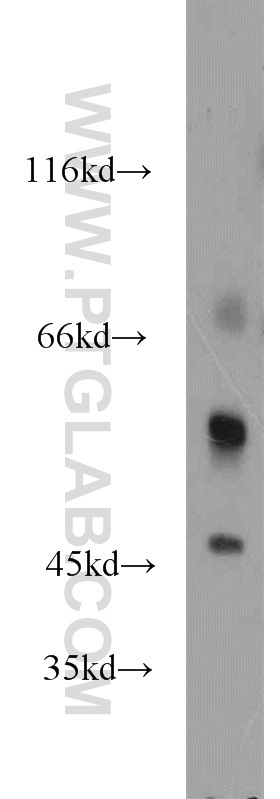
- Western blot [1]
- Immunohistochemistry [2]
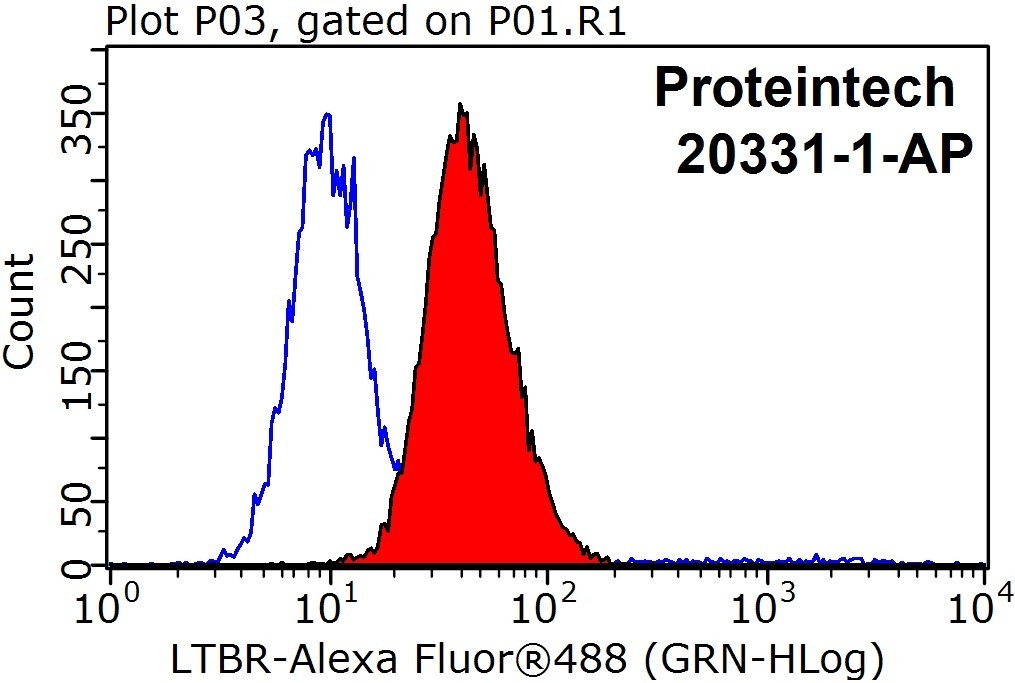
- Flow cytometry [1]
Submit
Validation data
Reference
Comment
Report error
- Product number
- 20331-1-AP - Provider product page

- Provider
- Proteintech Group
- Proper citation
- Proteintech Cat#20331-1-AP, RRID:AB_10694276
- Product name
- LTBR antibody
- Antibody type
- Polyclonal
- Description
- KD/KO validated LTBR antibody (Cat. #20331-1-AP) is a rabbit polyclonal antibody that shows reactivity with human, mouse and has been validated for the following applications: FC, IHC, WB, ELISA.
- Reactivity
- Human, Mouse
- Host
- Rabbit
- Conjugate
- Unconjugated
- Isotype
- IgG
- Vial size
- 20ul, 150ul
Submitted references RASSF1A inhibits gastric cancer metastasis by reducing neutrophil infiltration and neutrophil extracellular trap formation via ribosome biogenesis.
Genome-wide mapping of RNA-protein associations through sequencing.
Plac1(+) Tumor Cell-Treg Interplay Supports Tumorigenesis and Progression of Head and Neck Cancer.
Reduction of lymphotoxin beta receptor induces cellular senescence via the MDMX-p53 pathway.
Noncanonical function of Pannexin1 promotes cellular senescence and renal fibrosis post-acute kidney injury.
LUBAC enables tumor-promoting LTβ receptor signaling by activating canonical NF-κB.
Comprehensive analysis reveals that LTBR is a immune-related biomarker for glioma.
A LIGHT-HVEM/LTβR axis contributes to the fibrosis of intrauterine adhesion.
Activation of NF-κB-Inducing Kinase in Islet β Cells Causes β Cell Failure and Diabetes.
Islet α-cell Inflammation Induced By NF-κB inducing kinase (NIK) Leads to Hypoglycemia, Pancreatitis, Growth Retardation, and Postnatal Death in Mice.
Lymphotoxins Promote the Progression of Human Lymphatic Malformation by Enhancing Lymphatic Endothelial Cell Proliferation.
Lymphotoxin β receptor activation promotes mRNA expression of RelA and pro-inflammatory cytokines TNFα and IL-1β in bladder cancer cells.
SNX17 affects T cell activation by regulating TCR and integrin recycling.
Chen Y, Dai L, Chen G, Deng S, Liu R, Xue W, Hu Y, Yi J
International immunopharmacology 2026 May 1;176:116475
International immunopharmacology 2026 May 1;176:116475
Genome-wide mapping of RNA-protein associations through sequencing.
Qi Z, Xue S, Chen J, Zhao W, Johnson K, Wen X, Charles Richard JL, Lin P, Zhong S
Nature biotechnology 2025 Sep 9;
Nature biotechnology 2025 Sep 9;
Plac1(+) Tumor Cell-Treg Interplay Supports Tumorigenesis and Progression of Head and Neck Cancer.
Meng X, Liu Z, Zhao L, Li R, Gan L, Cao L, Sun J, Zhang L, He Y
Advanced science (Weinheim, Baden-Wurttemberg, Germany) 2025 May;12(17):e2417312
Advanced science (Weinheim, Baden-Wurttemberg, Germany) 2025 May;12(17):e2417312
Reduction of lymphotoxin beta receptor induces cellular senescence via the MDMX-p53 pathway.
Kim SY, Lee B, Lee JJ, Kwak MS, Rhee WJ, Park IH, Shin JS
Cell death discovery 2025 Aug 29;11(1):416
Cell death discovery 2025 Aug 29;11(1):416
Noncanonical function of Pannexin1 promotes cellular senescence and renal fibrosis post-acute kidney injury.
Huang L, Shen Y, Pan X, Li J, Li C, Ruan L, He S, Huang L, Liu K, Zhao X, Geng J, Guo J, Hou FF, Wang J
Nature communications 2025 Aug 19;16(1):7699
Nature communications 2025 Aug 19;16(1):7699
LUBAC enables tumor-promoting LTβ receptor signaling by activating canonical NF-κB.
Chen YG, Rieser E, Bhamra A, Surinova S, Kreuzaler P, Ho MH, Tsai WC, Peltzer N, de Miguel D, Walczak H
Cell death and differentiation 2024 Oct;31(10):1267-1284
Cell death and differentiation 2024 Oct;31(10):1267-1284
Comprehensive analysis reveals that LTBR is a immune-related biomarker for glioma.
Tang Q, Yuan Y, Li L, Xu Y, Ji W, Xiao S, Han Y, Miao W, Cai J, You P, Chen M, Ding S, Li Z, Qi Z, Hou W, Luo H
Computers in biology and medicine 2024 May;174:108457
Computers in biology and medicine 2024 May;174:108457
A LIGHT-HVEM/LTβR axis contributes to the fibrosis of intrauterine adhesion.
Abudukeyoumu A, Lai ZZ, Lu JJ, Zhang X, Hou DY, Dong J, Wu JN, Li MQ, Xie F
Journal of reproductive immunology 2022 Sep;153:103693
Journal of reproductive immunology 2022 Sep;153:103693
Activation of NF-κB-Inducing Kinase in Islet β Cells Causes β Cell Failure and Diabetes.
Li X, Wu Y, Song Y, Ding N, Lu M, Jia L, Zhao Y, Liu M, Chen Z
Molecular therapy : the journal of the American Society of Gene Therapy 2020 Nov 4;28(11):2430-2441
Molecular therapy : the journal of the American Society of Gene Therapy 2020 Nov 4;28(11):2430-2441
Islet α-cell Inflammation Induced By NF-κB inducing kinase (NIK) Leads to Hypoglycemia, Pancreatitis, Growth Retardation, and Postnatal Death in Mice.
Li X, Jia L, Chen X, Dong Y, Ren X, Dong Y, Chen Y, Xie L, Liu M, Shiota C, Gittes GK, Rui L, Chen Z
Theranostics 2018;8(21):5960-5971
Theranostics 2018;8(21):5960-5971
Lymphotoxins Promote the Progression of Human Lymphatic Malformation by Enhancing Lymphatic Endothelial Cell Proliferation.
Yang JG, Sun YF, He KF, Ren JG, Liu ZJ, Liu B, Zhang W, Zhao YF
The American journal of pathology 2017 Nov;187(11):2602-2615
The American journal of pathology 2017 Nov;187(11):2602-2615
Lymphotoxin β receptor activation promotes mRNA expression of RelA and pro-inflammatory cytokines TNFα and IL-1β in bladder cancer cells.
Shen M, Zhou L, Zhou P, Zhou W, Lin X
Molecular medicine reports 2017 Jul;16(1):937-942
Molecular medicine reports 2017 Jul;16(1):937-942
SNX17 affects T cell activation by regulating TCR and integrin recycling.
Osborne DG, Piotrowski JT, Dick CJ, Zhang JS, Billadeau DD
Journal of immunology (Baltimore, Md. : 1950) 2015 May 1;194(9):4555-66
Journal of immunology (Baltimore, Md. : 1950) 2015 May 1;194(9):4555-66
No comments: Submit comment
Supportive validation
- Submitted by
- Proteintech Group (provider)
- Main image
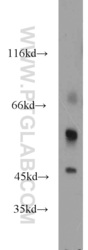
- Experimental details
- mouse brain tissue were subjected to SDS PAGE followed by western blot with 20331-1-AP(LTBR antibody) at dilution of 1:1000
- Sample type
- tissue
Supportive validation
- Submitted by
- Proteintech Group (provider)
- Main image
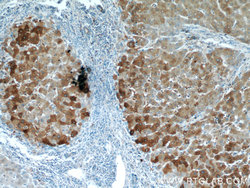
- Experimental details
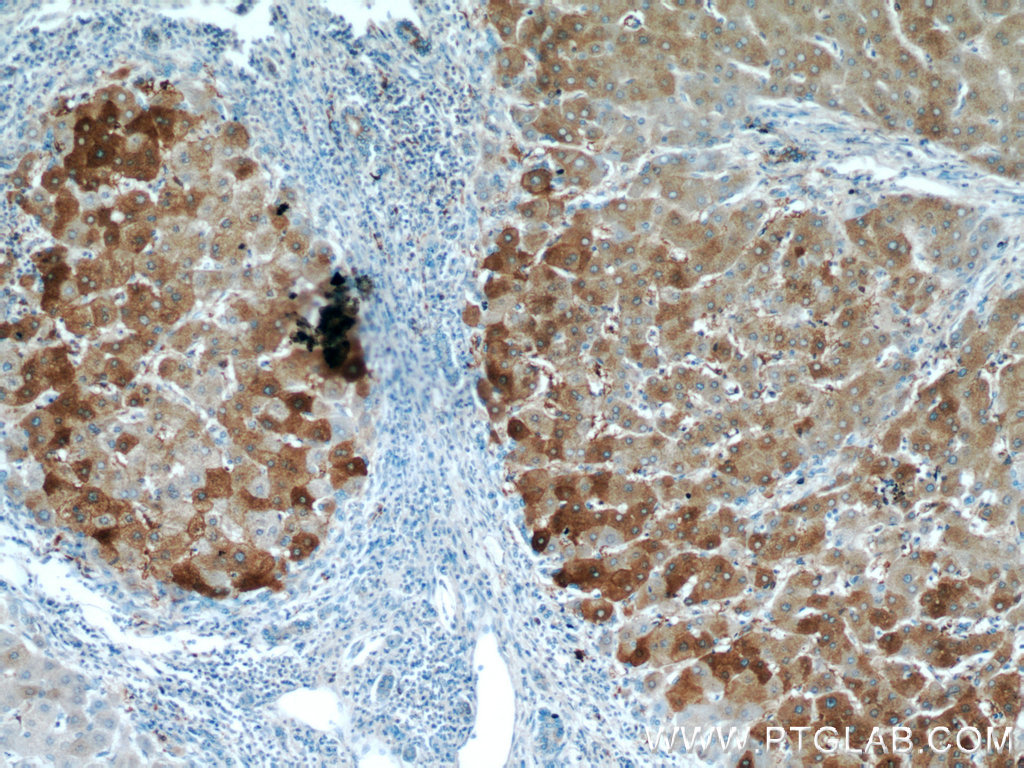
- Immunohistochemical of paraffin-embedded human hepatocirrhosis using 20331-1-AP(LTBR antibody) at dilution of 1:50 (under 10x lens)
- Sample type
- tissue
- Submitted by
- Proteintech Group (provider)
- Main image
- Experimental details
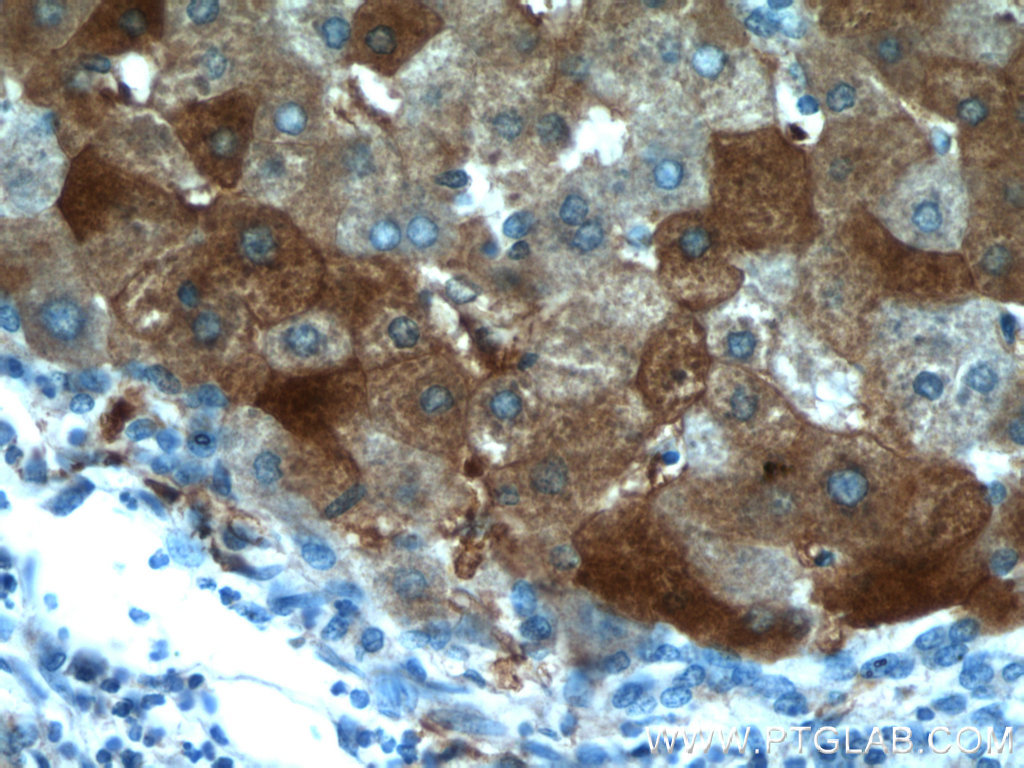
- Immunohistochemical of paraffin-embedded human hepatocirrhosis using 20331-1-AP(LTBR antibody) at dilution of 1:50 (under 40x lens)
- Sample type
- tissue
Supportive validation
- Submitted by
- Proteintech Group (provider)
- Main image
- Experimental details
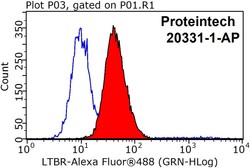
- The LTBR antibody from Proteintech is a rabbit polyclonal antibody to a fusion protein of human LTBR. This antibody recognizes human, mouse antigen. The LTBR antibody has been validated for the following applications: ELISA, WB, IHC, FC analysis.