Explore
 Validate
 Learn
Learn Western blot
 ELISA
ELISAAntibody data
- Antibody Data
- Antigen structure
- References [8]
- Comments [0]
- Validations
- Western blot [1]
- Immunohistochemistry [1]
Submit
Validation data
Reference
Comment
Report error
- Product number
- 10238-1-AP - Provider product page

- Provider
- Proteintech Group
- Proper citation
- Proteintech Cat#10238-1-AP, RRID:AB_2163993
- Product name
- PLEKHA1 antibody
- Antibody type
- Polyclonal
- Description
- PLEKHA1 antibody (Cat. #10238-1-AP) is a rabbit polyclonal antibody that shows reactivity with human, mouse and has been validated for the following applications: IF, IHC, WB,ELISA.
- Reactivity
- Human, Mouse
- Host
- Rabbit
- Conjugate
- Unconjugated
- Isotype
- IgG
- Vial size
- 20ul, 150ul
Submitted references KDM4B modulates ERα signaling pathway to participate in vascular smooth muscle cell calcification.
RBAP48 facilitates the oral squamous cell carcinoma process in an androgen receptor-dependent and independent manners.
Multi-omic quantitative trait loci link tandem repeat size variation to gene regulation in human brain.
EIF4G2 Promotes Hepatocellular Carcinoma Progression via IRES-dependent PLEKHA1 Translation Regulation.
BAP18 facilitates CTCF-mediated chromatin accessible to regulate enhancer activity in breast cancer.
An H3K4me3 reader, BAP18 as an adaptor of COMPASS-like core subunits co-activates ERα action and associates with the sensitivity of antiestrogen in breast cancer.
Function-first ligandomics for ocular vascular research and drug target discovery.
Secretogranin III as a disease-associated ligand for antiangiogenic therapy of diabetic retinopathy.
Liu F, Lv Y, Lin Y, Wang C, Wang S, Zeng K, Zhou B, Lin L, Feng J, Sun G, Chang X, Cao M, Li H, Hu X, Kato S, Zhao Y, Tian W
Cell death discovery 2025 Oct 7;11(1):452
Cell death discovery 2025 Oct 7;11(1):452
RBAP48 facilitates the oral squamous cell carcinoma process in an androgen receptor-dependent and independent manners.
Wang X, Yan G, Li H, Wang C, Kang Y, Wang S, Liu W, Lin L, Zou R, Zeng K, Wang M, Luan R, Zhou B, Bai Y, Yang D, Ning B, Sun G, Zhao Y
Communications biology 2025 May 30;8(1):829
Communications biology 2025 May 30;8(1):829
Multi-omic quantitative trait loci link tandem repeat size variation to gene regulation in human brain.
Cui Y, Arnold FJ, Li JS, Wu J, Wang D, Philippe J, Colwin MR, Michels S, Chen C, Sallam T, Thompson LM, La Spada AR, Li W
Nature genetics 2025 Feb;57(2):369-378
Nature genetics 2025 Feb;57(2):369-378
EIF4G2 Promotes Hepatocellular Carcinoma Progression via IRES-dependent PLEKHA1 Translation Regulation.
Li M, Lou L, Ren L, Li C, Han R, Jiang J, Qi L, Jiang Y
Journal of proteome research 2024 Oct 4;23(10):4553-4566
Journal of proteome research 2024 Oct 4;23(10):4553-4566
BAP18 facilitates CTCF-mediated chromatin accessible to regulate enhancer activity in breast cancer.
Sun G, Wei Y, Zhou B, Wang M, Luan R, Bai Y, Li H, Wang S, Zheng D, Wang C, Wang S, Zeng K, Liu S, Lin L, He M, Zhang Q, Zhao Y
Cell death and differentiation 2023 May;30(5):1260-1278
Cell death and differentiation 2023 May;30(5):1260-1278
An H3K4me3 reader, BAP18 as an adaptor of COMPASS-like core subunits co-activates ERα action and associates with the sensitivity of antiestrogen in breast cancer.
Sun G, Wang C, Wang S, Sun H, Zeng K, Zou R, Lin L, Liu W, Sun N, Song H, Liu W, Zhou T, Jin F, Shan Z, Zhao Y
Nucleic acids research 2020 Nov 4;48(19):10768-10784
Nucleic acids research 2020 Nov 4;48(19):10768-10784
Function-first ligandomics for ocular vascular research and drug target discovery.
Rong X, Tian H, Yang L, Li W
Experimental eye research 2019 May;182:57-64
Experimental eye research 2019 May;182:57-64
Secretogranin III as a disease-associated ligand for antiangiogenic therapy of diabetic retinopathy.
LeBlanc ME, Wang W, Chen X, Caberoy NB, Guo F, Shen C, Ji Y, Tian H, Wang H, Chen R, Li W
The Journal of experimental medicine 2017 Apr 3;214(4):1029-1047
The Journal of experimental medicine 2017 Apr 3;214(4):1029-1047
No comments: Submit comment
Supportive validation
- Submitted by
- Proteintech Group (provider)
- Main image
- Experimental details
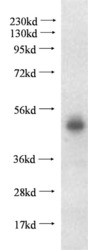
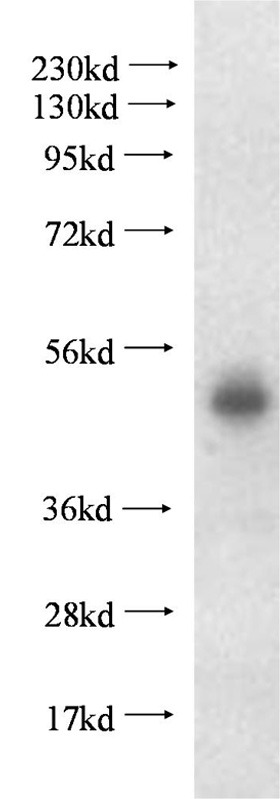
- human placenta tissue were subjected to SDS PAGE followed by western blot with 10238-1-AP(PLEKHA1 antibody) at dilution of 1:500
- Sample type
- tissue
Supportive validation
- Submitted by
- Proteintech Group (provider)
- Main image
- Experimental details
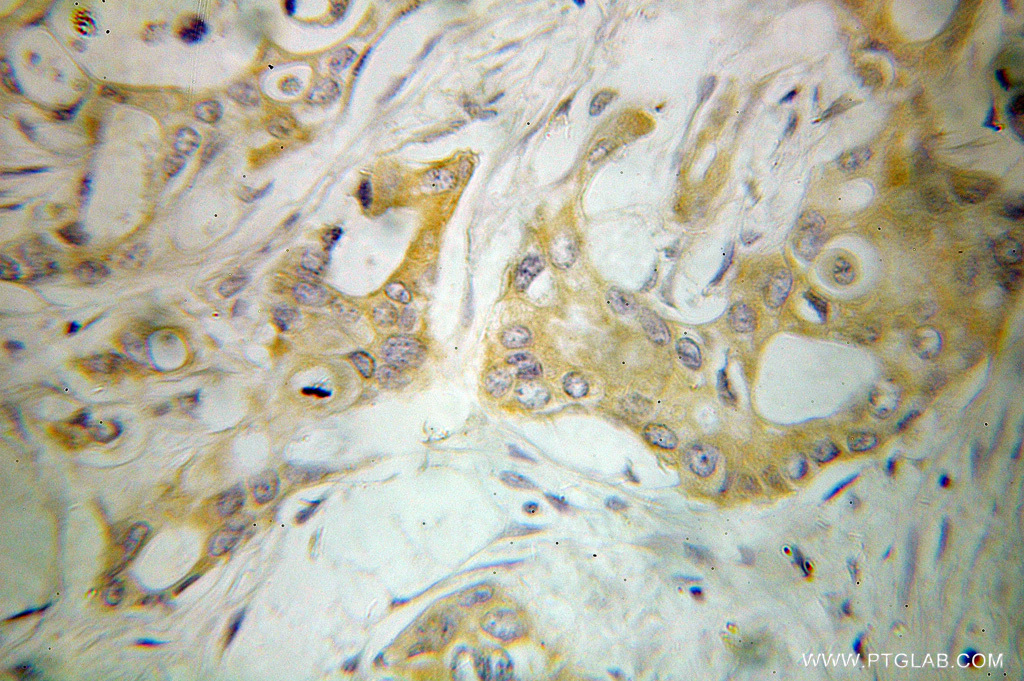
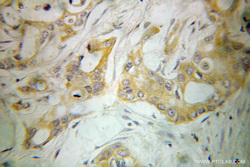
- The PLEKHA1 antibody from Proteintech is a rabbit polyclonal antibody to a recombinant protein of human PLEKHA1. This antibody recognizes human, mouse, rat antigen. The PLEKHA1 antibody has been validated for the following applications: ELISA, WB, IHC analysis.