Explore
 Validate
 Learn
Learn Western blot
 ELISA
ELISAAntibody data
- Antibody Data
- Antigen structure
- References [19]
- Comments [0]
- Validations
- Western blot [1]
- Immunocytochemistry [1]
- Immunoprecipitation [1]
- Immunohistochemistry [1]
Submit
Validation data
Reference
Comment
Report error
- Product number
- 11515-1-AP - Provider product page

- Provider
- Proteintech Group
- Proper citation
- Proteintech Cat#11515-1-AP, RRID:AB_2150003
- Product name
- NCAPH antibody
- Antibody type
- Polyclonal
- Description
- KD/KO validated NCAPH antibody (Cat. #11515-1-AP) is a rabbit polyclonal antibody that shows reactivity with human, mouse, rat and has been validated for the following applications: IF, IHC, IP, WB, ELISA.
- Reactivity
- Human, Mouse, Rat
- Host
- Rabbit
- Conjugate
- Unconjugated
- Isotype
- IgG
- Vial size
- 20ul, 150ul
Submitted references Genome-wide DNA supercoiling arises from transcription and SMC activity and mediates transcriptional negative feedback.
NCAPH promotes immune evasion via inhibiting PD-L1 protein degradation in head and neck squamous cell carcinoma.
NCAPH Promotes the Proliferation of Prostate Cancer Cells Via Modulating the E2F1 Mediated PI3K/AKT/mTOR Axis.
MiR-1976 affects lung squamous cell carcinoma development by targeting NCAPH.
NCAPH serves as a prognostic factor and promotes the tumor progression in glioma through PI3K/AKT signaling pathway.
Non-SMC condensin I complex subunit H promotes cell proliferation and inhibits cell apoptosis of clear cell renal cell carcinoma by activating the PI3K/AKT pathway.
ZCCHC3 and Efp coordinately contribute to the pathophysiology of triple-negative breast cancer by modulating NCAPH.
Proximity labelling of pro-interleukin-1α reveals evolutionary conserved nuclear interactions.
NCAPH, ubiquitinated by TRIM21, promotes cell proliferation by inhibiting autophagy of cervical cancer through AKT/mTOR dependent signaling.
Single-nucleosome imaging unveils that condensins and nucleosome-nucleosome interactions differentially constrain chromatin to organize mitotic chromosomes.
StayGold variants for molecular fusion and membrane-targeting applications.
Loss-of-function variants in KCTD19 cause non-obstructive azoospermia in humans.
NCAPH regulates gastric cancer progression through DNA damage response.
NCAPH is a prognostic biomarker and associated with immune infiltrates in lung adenocarcinoma.
NCAPH promotes cell proliferation and inhibits cell apoptosis of bladder cancer cells through MEK/ERK signaling pathway.
OCT1 Is a Poor Prognostic Factor for Breast Cancer Patients and Promotes Cell Proliferation via Inducing NCAPH.
Non-SMC condensin I complex subunit H enhances proliferation, migration, and invasion of hepatocellular carcinoma.
Ki-67 and condensins support the integrity of mitotic chromosomes through distinct mechanisms.
NCAPH plays important roles in human colon cancer.
Zhu L, Yao Q, Vemuri C, Chen C
bioRxiv : the preprint server for biology 2026 Mar 26;
bioRxiv : the preprint server for biology 2026 Mar 26;
NCAPH promotes immune evasion via inhibiting PD-L1 protein degradation in head and neck squamous cell carcinoma.
Liu B, Xiang X, Cheng Y, Fei J, Wu M, Qu L, Zhao X, Chen X, Li Y, Du J, Mu D, Zhai H, Shen Q, Chen Y, Yang C
Cancer letters 2026 Feb 28;639:218218
Cancer letters 2026 Feb 28;639:218218
NCAPH Promotes the Proliferation of Prostate Cancer Cells Via Modulating the E2F1 Mediated PI3K/AKT/mTOR Axis.
Shi Q, Ma J, Pan X, Liu T, Chen K, Xu M, Wu Z, Sun B, Zhang M, Luo Y
International journal of medical sciences 2025;22(4):940-954
International journal of medical sciences 2025;22(4):940-954
MiR-1976 affects lung squamous cell carcinoma development by targeting NCAPH.
Li Y, Zhou H, Yao Y, Fan Z
Journal of applied genetics 2025 Jul 23;
Journal of applied genetics 2025 Jul 23;
NCAPH serves as a prognostic factor and promotes the tumor progression in glioma through PI3K/AKT signaling pathway.
Liang J, Yun D, Jin W, Fan J, Wang X, Wang X, Li Y, Yu S, Zhang C, Li T, Yang X
Molecular and cellular biochemistry 2025 Jan;480(1):589-605
Molecular and cellular biochemistry 2025 Jan;480(1):589-605
Non-SMC condensin I complex subunit H promotes cell proliferation and inhibits cell apoptosis of clear cell renal cell carcinoma by activating the PI3K/AKT pathway.
Ha H, Wang J, Zhang X, Du Y, Xiong W, Li S, Shang P
Translational andrology and urology 2025 Aug 30;14(8):2153-2170
Translational andrology and urology 2025 Aug 30;14(8):2153-2170
ZCCHC3 and Efp coordinately contribute to the pathophysiology of triple-negative breast cancer by modulating NCAPH.
Fujimoto A, Ikeda K, Takeiwa T, Osaki A, Horie K, Inoue S
Biochemical and biophysical research communications 2024 Nov 26;735:150663
Biochemical and biophysical research communications 2024 Nov 26;735:150663
Proximity labelling of pro-interleukin-1α reveals evolutionary conserved nuclear interactions.
Wellens R, Tapia VS, Seoane PI, Bennett H, Adamson A, Coutts G, Rivers-Auty J, Lowe M, Green JP, Lopez-Castejon G, Brough D, Hoyle C
Nature communications 2024 Aug 8;15(1):6750
Nature communications 2024 Aug 8;15(1):6750
NCAPH, ubiquitinated by TRIM21, promotes cell proliferation by inhibiting autophagy of cervical cancer through AKT/mTOR dependent signaling.
Wang S, Qiao X, Cui Y, Liu L, Cooper T, Hu Y, Lin J, Liu H, Wang M, Hayball J, Wang X
Cell death & disease 2024 Aug 6;15(8):565
Cell death & disease 2024 Aug 6;15(8):565
Single-nucleosome imaging unveils that condensins and nucleosome-nucleosome interactions differentially constrain chromatin to organize mitotic chromosomes.
Hibino K, Sakai Y, Tamura S, Takagi M, Minami K, Natsume T, Shimazoe MA, Kanemaki MT, Imamoto N, Maeshima K
Nature communications 2024 Aug 21;15(1):7152
Nature communications 2024 Aug 21;15(1):7152
StayGold variants for molecular fusion and membrane-targeting applications.
Ando R, Shimozono S, Ago H, Takagi M, Sugiyama M, Kurokawa H, Hirano M, Niino Y, Ueno G, Ishidate F, Fujiwara T, Okada Y, Yamamoto M, Miyawaki A
Nature methods 2024 Apr;21(4):648-656
Nature methods 2024 Apr;21(4):648-656
Loss-of-function variants in KCTD19 cause non-obstructive azoospermia in humans.
Liu J, Rahim F, Zhou J, Fan S, Jiang H, Yu C, Chen J, Xu J, Yang G, Shah W, Zubair M, Khan A, Li Y, Shah B, Zhao D, Iqbal F, Jiang X, Guo T, Xu P, Xu B, Wu L, Ma H, Zhang Y, Zhang H, Shi Q
iScience 2023 Jul 21;26(7):107193
iScience 2023 Jul 21;26(7):107193
NCAPH regulates gastric cancer progression through DNA damage response.
Wang Y, Li JQ, Yang ZL, Wang L, Zhang JC, Sun YF, Li ZY, Qin L
Neoplasma 2022 Mar;69(2):283-291
Neoplasma 2022 Mar;69(2):283-291
NCAPH is a prognostic biomarker and associated with immune infiltrates in lung adenocarcinoma.
Li C, Meng J, Zhang T
Scientific reports 2022 Jun 10;12(1):9578
Scientific reports 2022 Jun 10;12(1):9578
NCAPH promotes cell proliferation and inhibits cell apoptosis of bladder cancer cells through MEK/ERK signaling pathway.
Li B, Xiao Q, Shan L, Song Y
Cell cycle (Georgetown, Tex.) 2022 Feb;21(4):427-438
Cell cycle (Georgetown, Tex.) 2022 Feb;21(4):427-438
OCT1 Is a Poor Prognostic Factor for Breast Cancer Patients and Promotes Cell Proliferation via Inducing NCAPH.
Ogura T, Azuma K, Sato J, Kinowaki K, Takayama KI, Takeiwa T, Kawabata H, Inoue S
International journal of molecular sciences 2021 Oct 25;22(21)
International journal of molecular sciences 2021 Oct 25;22(21)
Non-SMC condensin I complex subunit H enhances proliferation, migration, and invasion of hepatocellular carcinoma.
Sun C, Huang S, Wang H, Xie R, Zhang L, Zhou Q, He X, Ju W
Molecular carcinogenesis 2019 Dec;58(12):2266-2275
Molecular carcinogenesis 2019 Dec;58(12):2266-2275
Ki-67 and condensins support the integrity of mitotic chromosomes through distinct mechanisms.
Takagi M, Ono T, Natsume T, Sakamoto C, Nakao M, Saitoh N, Kanemaki MT, Hirano T, Imamoto N
Journal of cell science 2018 Mar 22;131(6)
Journal of cell science 2018 Mar 22;131(6)
NCAPH plays important roles in human colon cancer.
Yin L, Jiang LP, Shen QS, Xiong QX, Zhuo X, Zhang LL, Yu HJ, Guo X, Luo Y, Dong J, Kong QP, Yang CP, Chen YB
Cell death & disease 2017 Mar 16;8(3):e2680
Cell death & disease 2017 Mar 16;8(3):e2680
No comments: Submit comment
Supportive validation
- Submitted by
- Proteintech Group (provider)
- Main image
- Experimental details
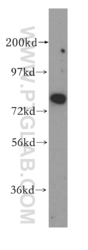
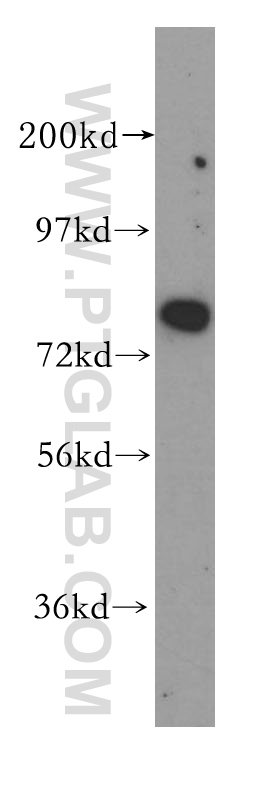
- HeLa cells were subjected to SDS PAGE followed by western blot with 11515-1-AP(NCAPH antibody) at dilution of 1:500
- Sample type
- cell line
Supportive validation
- Submitted by
- Proteintech Group (provider)
- Main image
- Experimental details
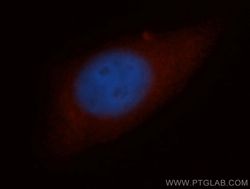
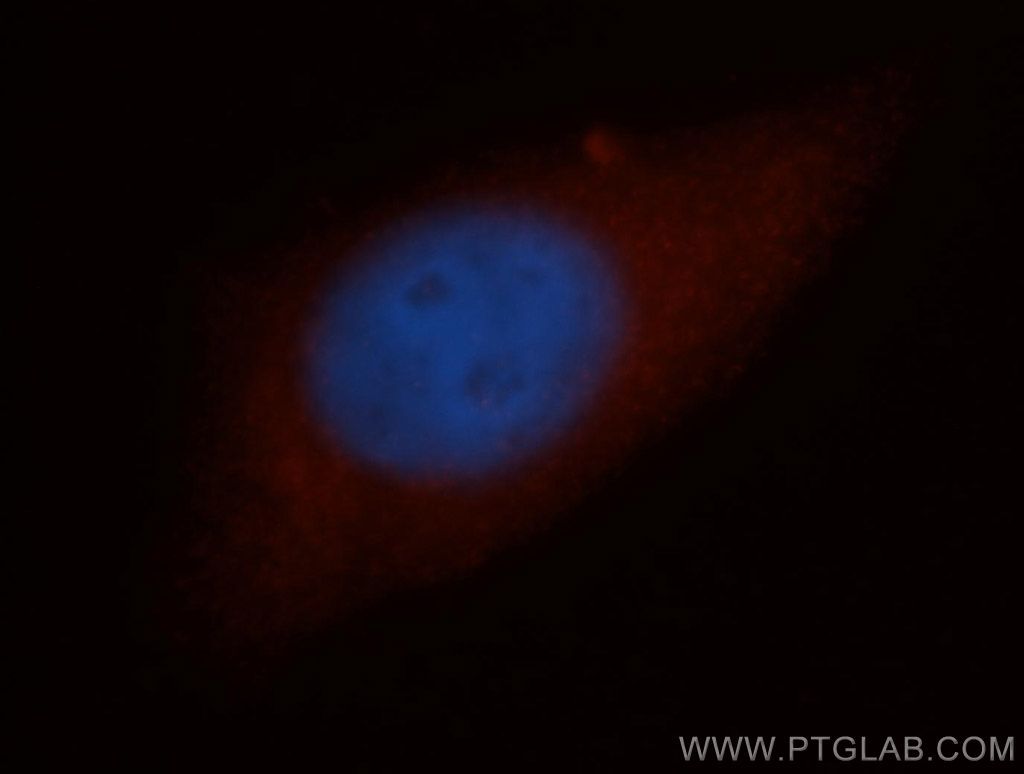
- Immunofluorescent analysis of HepG2 cells, using NCAPH antibody 11515-1-AP at 1:50 dilution and Rhodamine-labeled goat anti-rabbit IgG (red). Blue pseudocolor = DAPI (fluorescent DNA dye).
- Sample type
- cell line
Supportive validation
- Submitted by
- Proteintech Group (provider)
- Main image
- Experimental details
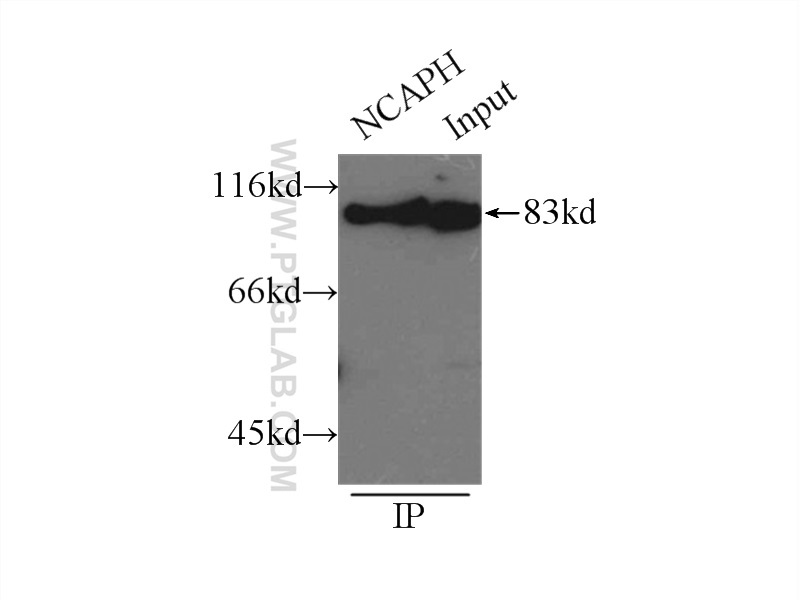
- IP Result of anti-NCAPH (IP:11515-1-AP, 3ug; Detection:11515-1-AP 1:800) with HeLa cells lysate 3000ug.
- Sample type
- cell line
Supportive validation
- Submitted by
- Proteintech Group (provider)
- Main image
- Experimental details
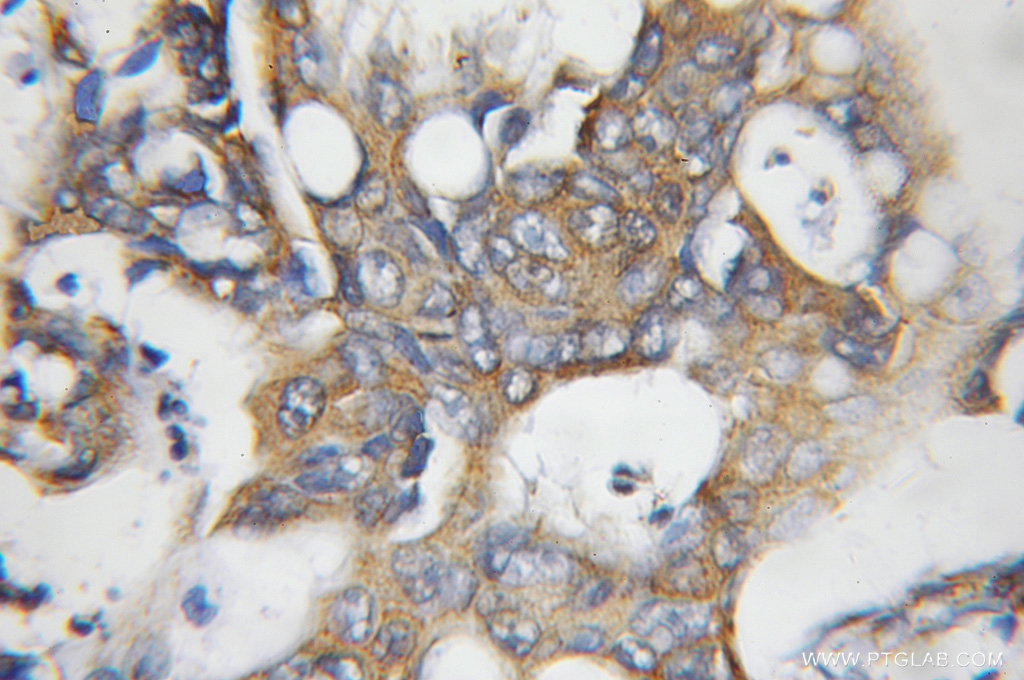
- Immunohistochemical of paraffin-embedded human colon cancer using 11515-1-AP(NCAPH antibody) at dilution of 1:50 (under 10x lens)
- Sample type
- tissue