Explore
 Validate
 Learn
Learn Western blot
 ELISA
ELISAAntibody data
- Antibody Data
- Antigen structure
- References [11]
- Comments [0]
- Validations
- Western blot [1]
- Immunocytochemistry [1]
- Immunoprecipitation [1]
- Immunohistochemistry [1]
Submit
Validation data
Reference
Comment
Report error
- Product number
- 14907-1-AP - Provider product page

- Provider
- Proteintech Group
- Proper citation
- Proteintech Cat#14907-1-AP, RRID:AB_2171098
- Product name
- PSME3 antibody
- Antibody type
- Polyclonal
- Description
- PSME3 antibody (Cat. #14907-1-AP) is a rabbit polyclonal antibody that shows reactivity with human, mouse, rat and has been validated for the following applications: IF, IHC, IP, WB, ELISA.
- Reactivity
- Human, Mouse, Rat
- Host
- Rabbit
- Conjugate
- Unconjugated
- Isotype
- IgG
- Vial size
- 20ul, 150ul
Submitted references PPM1D is directly degraded by proteasomes in a ubiquitination-independent manner through its carboxyl-terminal region.
Ubiquitin-independent pathway regulates the RIT1-MAPK pathway in chordoma progression.
REGγ-mediated Barrier Disruption and NF-κB Activation Aggravates Intestinal Inflammation in Necrotizing Enterocolitis.
PQBP3 prevents senescence by suppressing PSME3-mediated proteasomal Lamin B1 degradation.
PSME3 promotes lung adenocarcinoma development by regulating the TGF-β/SMAD signaling pathway.
Cold temperature extends longevity and prevents disease-related protein aggregation through PA28γ-induced proteasomes.
Indirubin-3'-monoxime acts as proteasome inhibitor: Therapeutic application in multiple myeloma.
REG γ knockdown suppresses proliferation by inducing apoptosis and cell cycle arrest in osteosarcoma.
The oncogenic role of REG γ is exerted by activating the Wnt/β-catenin signaling pathway in osteosarcoma.
Proteasome activator subunit 3 promotes pancreatic cancer growth via c-Myc-glycolysis signaling axis.
Comparative host protein interactions with HTLV-1 p30 and HTLV-2 p28: insights into difference in pathobiology of human retroviruses.
Takahashi M, Kondo T, Kimura S, Nakazono A, Yoshida S, Wada T, Watanabe M, Hatakeyama S
Journal of biomedical science 2025 Sep 11;32(1):88
Journal of biomedical science 2025 Sep 11;32(1):88
Ubiquitin-independent pathway regulates the RIT1-MAPK pathway in chordoma progression.
Chen H, Guan Q, Yang C, Chen Y, Liu Y, Ren W, Chen S, Li L, Li D, Tang J, Zhong N
Cell death & disease 2025 Oct 24;16(1):756
Cell death & disease 2025 Oct 24;16(1):756
REGγ-mediated Barrier Disruption and NF-κB Activation Aggravates Intestinal Inflammation in Necrotizing Enterocolitis.
Li Y, Pan D, Liu H, Xie W, Li X, Mu X, Chen L, Yang M, Wang X, Li X, Li J, Zhang B, Guan F, Aziz F, Cao J, Zhu X
Inflammation 2025 Aug;48(4):2476-2493
Inflammation 2025 Aug;48(4):2476-2493
PQBP3 prevents senescence by suppressing PSME3-mediated proteasomal Lamin B1 degradation.
Yoshioka Y, Huang Y, Jin X, Ngo KX, Kumaki T, Jin M, Toyoda S, Takayama S, Inotsume M, Fujita K, Homma H, Ando T, Tanaka H, Okazawa H
The EMBO journal 2024 Sep;43(18):3968-3999
The EMBO journal 2024 Sep;43(18):3968-3999
PSME3 promotes lung adenocarcinoma development by regulating the TGF-β/SMAD signaling pathway.
Wang S, Li Y, Jin K, Suda K, Li R, Zhang H, Tian H
Translational lung cancer research 2024 Jun 30;13(6):1331-1345
Translational lung cancer research 2024 Jun 30;13(6):1331-1345
Cold temperature extends longevity and prevents disease-related protein aggregation through PA28γ-induced proteasomes.
Lee HJ, Alirzayeva H, Koyuncu S, Rueber A, Noormohammadi A, Vilchez D
Nature aging 2023 May;3(5):546-566
Nature aging 2023 May;3(5):546-566
Indirubin-3'-monoxime acts as proteasome inhibitor: Therapeutic application in multiple myeloma.
Yu Z, Wei X, Liu L, Sun H, Fang T, Wang L, Li Y, Sui W, Wang K, He Y, Zhao Y, Huang W, An G, Meng F, Huang C, Yu T, Anderson KC, Cheng T, Qiu L, Hao M
EBioMedicine 2022 Apr;78:103950
EBioMedicine 2022 Apr;78:103950
REG γ knockdown suppresses proliferation by inducing apoptosis and cell cycle arrest in osteosarcoma.
Yin Z, Jin H, Huang S, Qu G, Meng Q
PeerJ 2020;8:e8954
PeerJ 2020;8:e8954
The oncogenic role of REG γ is exerted by activating the Wnt/β-catenin signaling pathway in osteosarcoma.
Yin Z, Peng Z, Wang Z, Meng Q
American journal of translational research 2020;12(2):563-573
American journal of translational research 2020;12(2):563-573
Proteasome activator subunit 3 promotes pancreatic cancer growth via c-Myc-glycolysis signaling axis.
Guo J, Hao J, Jiang H, Jin J, Wu H, Jin Z, Li Z
Cancer letters 2017 Feb 1;386:161-167
Cancer letters 2017 Feb 1;386:161-167
Comparative host protein interactions with HTLV-1 p30 and HTLV-2 p28: insights into difference in pathobiology of human retroviruses.
Doueiri R, Anupam R, Kvaratskhelia M, Green KB, Lairmore MD, Green PL
Retrovirology 2012 Aug 9;9:64
Retrovirology 2012 Aug 9;9:64
No comments: Submit comment
Supportive validation
- Submitted by
- Proteintech Group (provider)
- Main image
- Experimental details
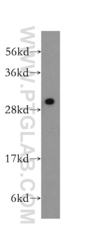
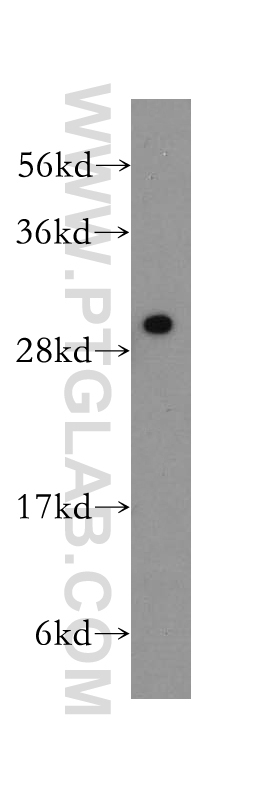
- human colon tissue were subjected to SDS PAGE followed by western blot with 14907-1-AP(PSME3 antibody) at dilution of 1:500
- Sample type
- tissue
Supportive validation
- Submitted by
- Proteintech Group (provider)
- Main image
- Experimental details
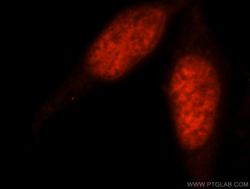
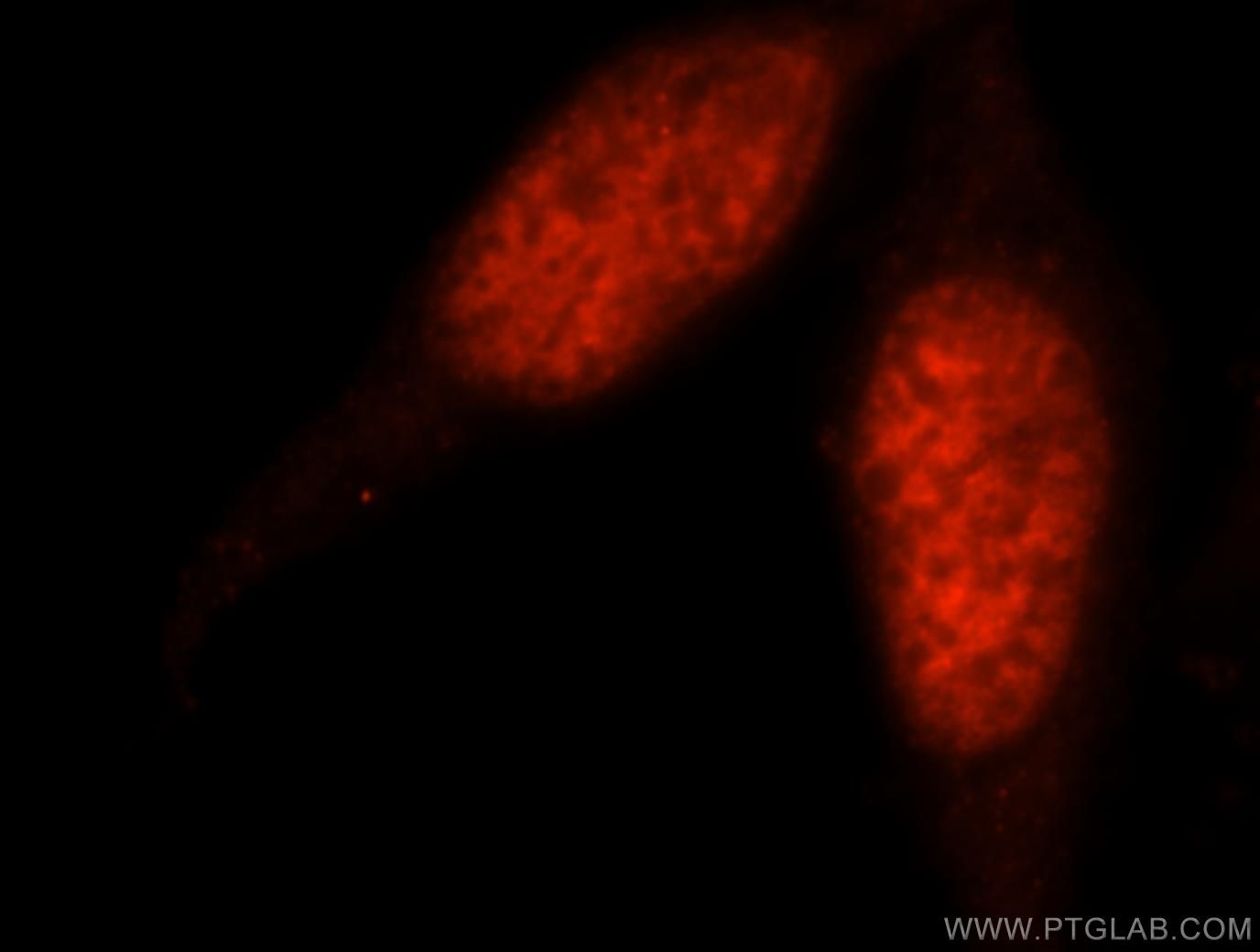
- Immunofluorescent analysis of HepG2 cells, using PSME3 antibody 14907-1-AP at 1:25 dilution and Rhodamine-labeled goat anti-rabbit IgG (red).
- Sample type
- cell line
Supportive validation
- Submitted by
- Proteintech Group (provider)
- Main image
- Experimental details
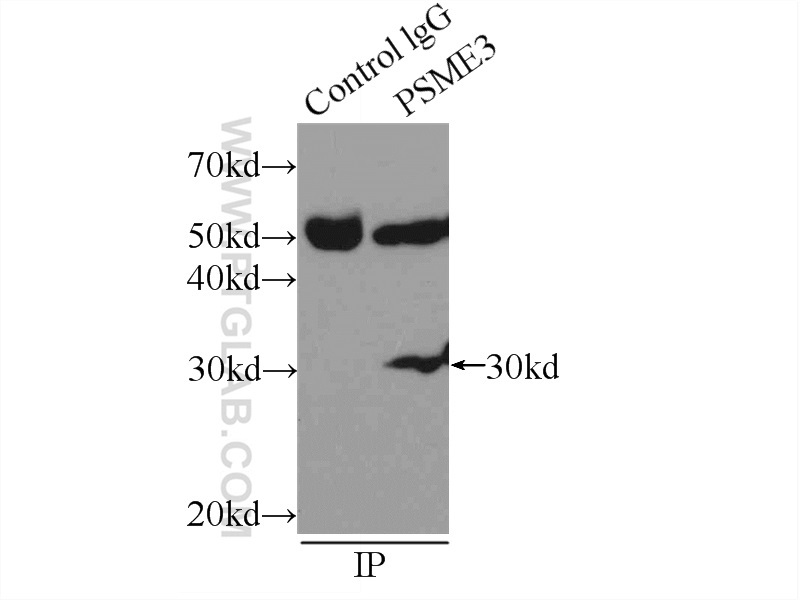
- IP Result of anti-PSME3 (IP:14907-1-AP, 3ug; Detection:14907-1-AP 1:500) with COLO 320 cells lysate 2000ug.
- Sample type
- cell line
Supportive validation
- Submitted by
- Proteintech Group (provider)
- Main image
- Experimental details
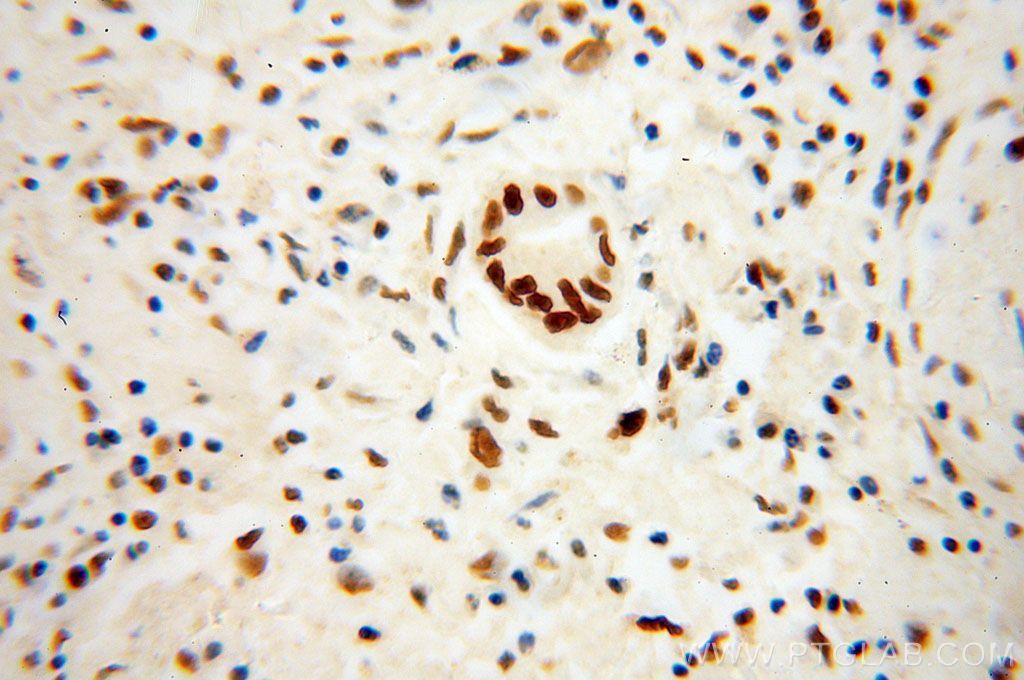
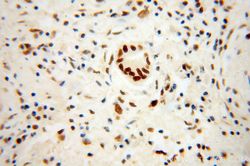
- Immunohistochemical of paraffin-embedded human colon cancer using 14907-1-AP(PSME3 antibody) at dilution of 1:50 (under 40x lens)
- Sample type
- tissue