Explore
 Validate
 Learn
Learn17387-1-AP
antibody from Proteintech Group
Targeting: SAMD4A
DKFZP434H0350, hSmaug1, KIAA1053, SAMD4, Smaug, SMG, SMGA
 Western blot
 ELISA
ELISAAntibody data
- Antibody Data
- Antigen structure
- References [12]
- Comments [0]
- Validations
- Western blot [1]
- Immunohistochemistry [2]
Submit
Validation data
Reference
Comment
Report error
- Product number
- 17387-1-AP - Provider product page

- Provider
- Proteintech Group
- Proper citation
- Proteintech Cat#17387-1-AP, RRID:AB_2301339
- Product name
- SAMD4A antibody
- Antibody type
- Polyclonal
- Description
- SAMD4A antibody (Cat. #17387-1-AP) is a rabbit polyclonal antibody that shows reactivity with human, mouse, rat and has been validated for the following applications: IHC, IP, WB,ELISA.
- Reactivity
- Human, Mouse, Rat
- Host
- Rabbit
- Conjugate
- Unconjugated
- Isotype
- IgG
- Vial size
- 20ul, 150ul
Submitted references SAMD4A inhibits abdominal aortic aneurysm development and VSMC phenotypic transformation through targeting KDM2B.
Condensate Formation of the Human RNA-binding Protein SMAUG1 is Controlled by its Intrinsically Disordered Regions and Interactions with 14-3-3 Proteins.
LSM12 promotes the lung squamous cell carcinoma progression through mediating alternative splicing of ARRB1.
RNA-binding protein SAMD4A targets FGF2 to regulate cardiomyocyte lineage specification from human embryonic stem cells.
BAG2 releases SAMD4B upon sensing of arginine deficiency to promote tumor cell survival.
GNG2 inhibits brain metastases from colorectal cancer via PI3K/AKT/mTOR signaling pathway.
1α,25(OH)2D3 Regulates the TGF-β1/Samd Signaling Pathway Inhibition of Hepatic Stellate Cell Activation.
MX2 forms nucleoporin-comprising cytoplasmic biomolecular condensates that lure viral capsids.
YAP/TAZ enhances P-body formation to promote tumorigenesis.
SAMD4A serves as a negative prognostic marker for gastric cancer patients.
Smad7 in the hippocampus contributes to memory impairment in aged mice after anesthesia and surgery.
SAMD4 family members suppress human hepatitis B virus by directly binding to the Smaug recognition region of viral RNA.
Chen Q, Liu S, Zhou H, Wang J, Xiao X, Chen G, Du J, Zhong L, Song H, Huang X
Journal of advanced research 2026 Jan;79:223-237
Journal of advanced research 2026 Jan;79:223-237
Condensate Formation of the Human RNA-binding Protein SMAUG1 is Controlled by its Intrinsically Disordered Regions and Interactions with 14-3-3 Proteins.
Carey O, Fehilly J, O'Leary ET, O'Shea S, Juda K, Fitzel R, Selvaraj P, Burk K, Lindsay AJ, Young P, Pancsa R, Mészáros B, Dean K
Journal of molecular biology 2025 Oct 1;437(19):169314
Journal of molecular biology 2025 Oct 1;437(19):169314
LSM12 promotes the lung squamous cell carcinoma progression through mediating alternative splicing of ARRB1.
Wu L, Zhang F, Chen H, Zhao G
Communications biology 2025 May 27;8(1):814
Communications biology 2025 May 27;8(1):814
RNA-binding protein SAMD4A targets FGF2 to regulate cardiomyocyte lineage specification from human embryonic stem cells.
Yi N, Wang HR, Zhu YP, Xiao T, Lin Q, Liu H, Meng YL, Sun YZ, Lin F, Hu SY, Cao HM, Zhang JF, Peng LY, Li L
Stem cell research & therapy 2025 Mar 18;16(1):144
Stem cell research & therapy 2025 Mar 18;16(1):144
BAG2 releases SAMD4B upon sensing of arginine deficiency to promote tumor cell survival.
Chen MY, Sun CY, Zhao R, Guan XL, Li ML, Zhang F, Wan ZH, Feng JX, Yin M, Lei QY, Ma QX
Molecular cell 2025 Jul 3;85(13):2581-2596.e6
Molecular cell 2025 Jul 3;85(13):2581-2596.e6
GNG2 inhibits brain metastases from colorectal cancer via PI3K/AKT/mTOR signaling pathway.
Luo C, Xiao Z, Yang W
Scientific reports 2025 Jan 13;15(1):1787
Scientific reports 2025 Jan 13;15(1):1787
1α,25(OH)2D3 Regulates the TGF-β1/Samd Signaling Pathway Inhibition of Hepatic Stellate Cell Activation.
Zhao Y, Fan J, Wang J, Wan J, Ma H, Sha X, Wang H
Drug research 2025 Apr;75(3-04):94-99
Drug research 2025 Apr;75(3-04):94-99
MX2 forms nucleoporin-comprising cytoplasmic biomolecular condensates that lure viral capsids.
Moschonas GD, Delhaye L, Cooreman R, Hüsers F, Bhat A, Stylianidou Z, De Bousser E, De Pryck L, Grzesik H, De Sutter D, Parthoens E, De Smet AS, Maciejczuk A, Lippens S, Callewaert N, Vandekerckhove L, Debyser Z, Sodeik B, Eyckerman S, Saelens X
Cell host & microbe 2024 Oct 9;32(10):1705-1724.e14
Cell host & microbe 2024 Oct 9;32(10):1705-1724.e14
YAP/TAZ enhances P-body formation to promote tumorigenesis.
Shen X, Peng X, Guo Y, Dai Z, Cui L, Yu W, Liu Y, Liu CY
eLife 2024 Jul 24;12
eLife 2024 Jul 24;12
SAMD4A serves as a negative prognostic marker for gastric cancer patients.
Li D, Qi T, Chen J
Tissue & cell 2023 Oct;84:102167
Tissue & cell 2023 Oct;84:102167
Smad7 in the hippocampus contributes to memory impairment in aged mice after anesthesia and surgery.
Liu C, Wu J, Li M, Gao R, Zhang X, Ye-Lehmann S, Song J, Zhu T, Chen C
Journal of neuroinflammation 2023 Jul 28;20(1):175
Journal of neuroinflammation 2023 Jul 28;20(1):175
SAMD4 family members suppress human hepatitis B virus by directly binding to the Smaug recognition region of viral RNA.
Wang Y, Fan X, Song Y, Liu Y, Liu R, Wu J, Li X, Yuan Q, Fu G, Xia N, Han J
Cellular & molecular immunology 2021 Apr;18(4):1032-1044
Cellular & molecular immunology 2021 Apr;18(4):1032-1044
No comments: Submit comment
Supportive validation
- Submitted by
- Proteintech Group (provider)
- Main image
- Experimental details
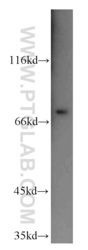
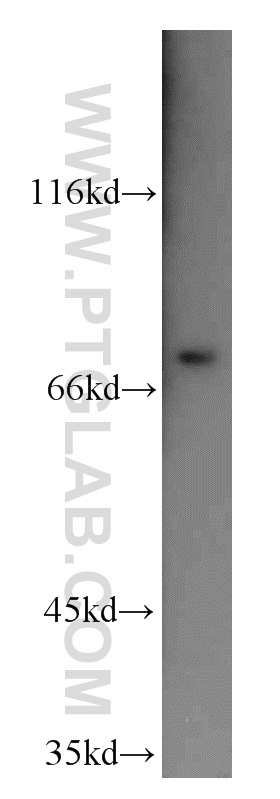
- mouse skeletal muscle tissue were subjected to SDS PAGE followed by western blot with 17387-1-AP(SAMD4A antibody) at dilution of 1:500
- Sample type
- tissue
Supportive validation
- Submitted by
- Proteintech Group (provider)
- Main image
- Experimental details
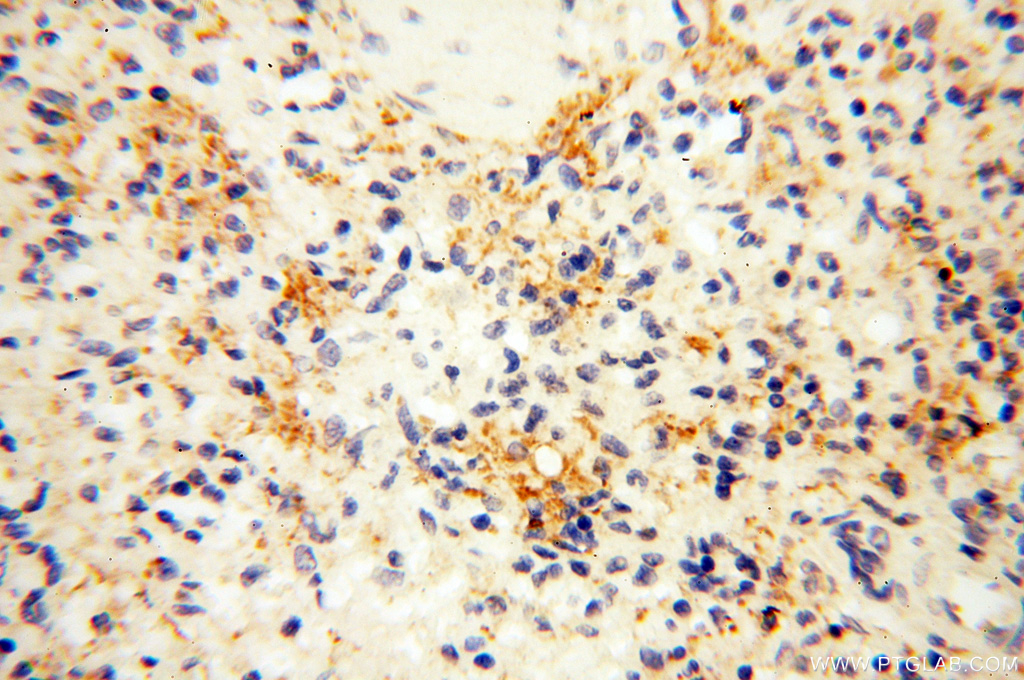
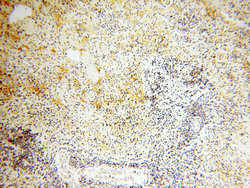
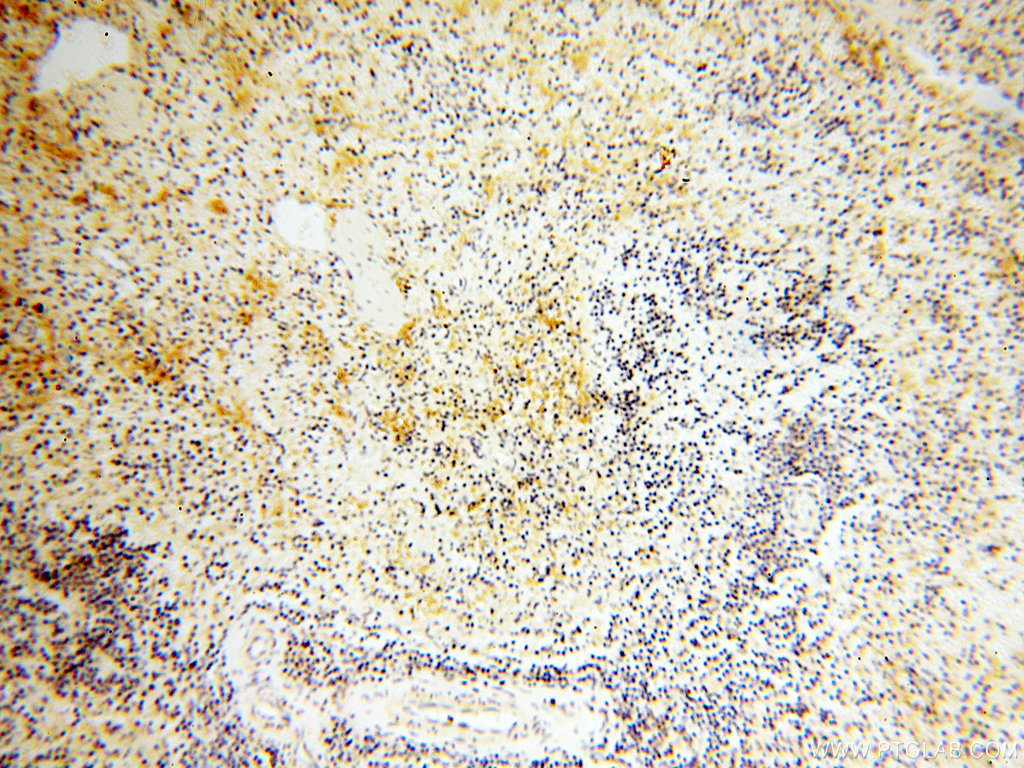
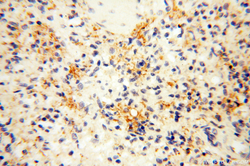
- Immunohistochemical of paraffin-embedded human spleen using 17387-1-AP(SAMD4A antibody) at dilution of 1:100 (under 10x lens)
- Sample type
- tissue
- Submitted by
- Proteintech Group (provider)
- Main image
- Experimental details
- The SAMD4A antibody from Proteintech is a rabbit polyclonal antibody to a recombinant protein of human SAMD4A. This antibody recognizes human, mouse, rat antigen. The SAMD4A antibody has been validated for the following applications: ELISA, WB, IHC analysis.