Explore
 Validate
 Learn
Learn Western blot
 ELISA
ELISAAntibody data
- Antibody Data
- Antigen structure
- References [22]
- Comments [0]
- Validations
- Western blot [1]
Submit
Validation data
Reference
Comment
Report error
- Product number
- 11427-1-AP - Provider product page

- Provider
- Proteintech Group
- Proper citation
- Proteintech Cat#11427-1-AP, RRID:AB_2227402
- Product name
- ANKRD1 antibody
- Antibody type
- Polyclonal
- Description
- ANKRD1 antibody (Cat. #11427-1-AP) is a rabbit polyclonal antibody that shows reactivity with human, mouse, rat and has been validated for the following applications: WB, ELISA.
- Reactivity
- Human, Mouse, Rat
- Host
- Rabbit
- Conjugate
- Unconjugated
- Isotype
- IgG
- Vial size
- 20ul, 150ul
Submitted references Left bundle branch vs biventricular pacing: mechanistic insights from a canine model.
DNA-methylation-mediated silencing of lncRNA PP7080 promotes the progression of gastric cancer by regulating ANKRD1 expression.
Cardiomyocyte-specific LARP6 overexpression prevents angiotensin II-induced myocardial dysfunction and interstitial fibrosis.
Single-cell transcription reveals hepatocyte-to-cholangiocyte reprogramming and biliary gene profile in biliary atresia.
Single-nucleus transcriptomics reveals subsets of degenerative myonuclei after rotator cuff tear-induced muscle atrophy.
YAP1 facilitates the pathogenesis of psoriasis via modulating keratinocyte proliferation and inflammation.
Glutamine synthetase modulates YAP activation by stabilizing LATS under glutamine homeostasis.
N6-methyladenosine-modified circTEAD1 stabilizes Yap1 mRNA to promote chordoma tumorigenesis.
Integrated transcriptomic and proteomic analysis reveals potential targets for heart regeneration.
MST2 methylation by PRMT5 inhibits Hippo signaling and promotes pancreatic cancer progression.
ICAM1 initiates CTC cluster formation and trans-endothelial migration in lung metastasis of breast cancer.
α-Arrestin ARRDC3 tumor suppressor function is linked to GPCR-induced TAZ activation and breast cancer metastasis.
YAP1/TAZ drives ependymoma-like tumour formation in mice.
Chondroitin synthase-3 regulates nucleus pulposus degeneration through actin-induced YAP signaling.
Recessive mutations in muscle-specific isoforms of FXR1 cause congenital multi-minicore myopathy.
Arterial stiffness induces remodeling phenotypes in pulmonary artery smooth muscle cells via YAP/TAZ-mediated repression of cyclooxygenase-2.
Characterization of muscle ankyrin repeat proteins in human skeletal muscle.
The histone code reader Spin1 controls skeletal muscle development.
Glucocorticoid receptor signalling activates YAP in breast cancer.
Exploiting the CRISPR/Cas9 system to study alternative splicing in vivo: application to titin.
Mineralocorticoid receptors are present in skeletal muscle and represent a potential therapeutic target.
Metabolic control of YAP and TAZ by the mevalonate pathway.
Huang H, Hu Y, Li H, Cheng S, Jiang Y, Weng S, He P, Yang J, Chen G, Liu X, Pei J, Chen L, Gu M, Ding L, Niu H, Jin H, Pan X, Vernooy K, Prinzen FW, Hua W
European heart journal 2026 Apr 1;47(13):1595-1605
European heart journal 2026 Apr 1;47(13):1595-1605
DNA-methylation-mediated silencing of lncRNA PP7080 promotes the progression of gastric cancer by regulating ANKRD1 expression.
Jiang H, Hou R, Wu X, Ding K, Zhu Y, Wang H, Ding J, Xu J
Translational oncology 2025 Sep;59:102440
Translational oncology 2025 Sep;59:102440
Cardiomyocyte-specific LARP6 overexpression prevents angiotensin II-induced myocardial dysfunction and interstitial fibrosis.
Russell JJ, Yoshida T, Ma L, Lee L, Davis DJ, Grisanti LA, Ruff M, Bailey CA, Bender SB, Chandrasekar B
American journal of physiology. Heart and circulatory physiology 2025 Sep 1;329(3):H730-H742
American journal of physiology. Heart and circulatory physiology 2025 Sep 1;329(3):H730-H742
Single-cell transcription reveals hepatocyte-to-cholangiocyte reprogramming and biliary gene profile in biliary atresia.
Meng L, Du M, Li H, Kong F, Yang J, Dong R, Zheng S, Chen G, Shen Z, Wang J
Hepatology communications 2025 May 1;9(5)
Hepatology communications 2025 May 1;9(5)
Single-nucleus transcriptomics reveals subsets of degenerative myonuclei after rotator cuff tear-induced muscle atrophy.
Sun Z, Cheng X, Wang Z, Qiao C, Qian H, Yuan T, Lv Z, Sun W, Zhang H, Liu Y, Lu Z, Lin J, Lai C, Wang Y, Yang X, Wang X, Meng J, Bao N
Cell proliferation 2025 Mar;58(3):e13763
Cell proliferation 2025 Mar;58(3):e13763
YAP1 facilitates the pathogenesis of psoriasis via modulating keratinocyte proliferation and inflammation.
Huang C, Li W, Shen C, Jiang B, Zhang K, Li X, Zhong W, Li Z, Chen Z, Chen C, Jian X, Liu X, Huang H, Yang L, Yu B
Cell death & disease 2025 Mar 19;16(1):186
Cell death & disease 2025 Mar 19;16(1):186
Glutamine synthetase modulates YAP activation by stabilizing LATS under glutamine homeostasis.
Li S, Ling T, Wang Y, Shi J, Wang Q, Lv J, Li J, Liu Y, Zhang Y, Liu C, Xia T, Chen D, Wang W, Liu HX, Piao HL
Cell reports 2025 Dec 23;44(12):116620
Cell reports 2025 Dec 23;44(12):116620
N6-methyladenosine-modified circTEAD1 stabilizes Yap1 mRNA to promote chordoma tumorigenesis.
Li H, Tang Y, Ruan X, Zhang J, Liu H, Yu S, Chen H, Yang H, Zhang K, Chen K
Clinical and translational medicine 2024 Apr;14(4):e1658
Clinical and translational medicine 2024 Apr;14(4):e1658
Integrated transcriptomic and proteomic analysis reveals potential targets for heart regeneration.
Liu L, Yang T, Jiang Q, Sun J, Gu L, Wang S, Li Y, Chen B, Zhao D, Sun R, Wang Q, Wang H, Wang L
Biomolecules & biomedicine 2023 Feb 1;23(1):101-113
Biomolecules & biomedicine 2023 Feb 1;23(1):101-113
MST2 methylation by PRMT5 inhibits Hippo signaling and promotes pancreatic cancer progression.
Sun Y, Jin X, Meng J, Guo F, Chen T, Zhao X, Wu H, Ren D
The EMBO journal 2023 Dec 1;42(23):e114558
The EMBO journal 2023 Dec 1;42(23):e114558
ICAM1 initiates CTC cluster formation and trans-endothelial migration in lung metastasis of breast cancer.
Taftaf R, Liu X, Singh S, Jia Y, Dashzeveg NK, Hoffmann AD, El-Shennawy L, Ramos EK, Adorno-Cruz V, Schuster EJ, Scholten D, Patel D, Zhang Y, Davis AA, Reduzzi C, Cao Y, D'Amico P, Shen Y, Cristofanilli M, Muller WA, Varadan V, Liu H
Nature communications 2021 Aug 11;12(1):4867
Nature communications 2021 Aug 11;12(1):4867
α-Arrestin ARRDC3 tumor suppressor function is linked to GPCR-induced TAZ activation and breast cancer metastasis.
Arakaki AKS, Pan WA, Wedegaertner H, Roca-Mercado I, Chinn L, Gujral TS, Trejo J
Journal of cell science 2021 Apr 15;134(8)
Journal of cell science 2021 Apr 15;134(8)
YAP1/TAZ drives ependymoma-like tumour formation in mice.
Eder N, Roncaroli F, Domart MC, Horswell S, Andreiuolo F, Flynn HR, Lopes AT, Claxton S, Kilday JP, Collinson L, Mao JH, Pietsch T, Thompson B, Snijders AP, Ultanir SK
Nature communications 2020 May 13;11(1):2380
Nature communications 2020 May 13;11(1):2380
Chondroitin synthase-3 regulates nucleus pulposus degeneration through actin-induced YAP signaling.
Wei L, Cao P, Xu C, Zhong H, Wang X, Bai M, Hu B, Wang R, Liu N, Tian Y, Chen H, Li J, Yuan W
FASEB journal : official publication of the Federation of American Societies for Experimental Biology 2020 Dec;34(12):16581-16600
FASEB journal : official publication of the Federation of American Societies for Experimental Biology 2020 Dec;34(12):16581-16600
Recessive mutations in muscle-specific isoforms of FXR1 cause congenital multi-minicore myopathy.
Estañ MC, Fernández-Núñez E, Zaki MS, Esteban MI, Donkervoort S, Hawkins C, Caparros-Martin JA, Saade D, Hu Y, Bolduc V, Chao KR, Nevado J, Lamuedra A, Largo R, Herrero-Beaumont G, Regadera J, Hernandez-Chico C, Tizzano EF, Martinez-Glez V, Carvajal JJ, Zong R, Nelson DL, Otaify GA, Temtamy S, Aglan M, Issa M, Bönnemann CG, Lapunzina P, Yoon G, Ruiz-Perez VL
Nature communications 2019 Feb 15;10(1):797
Nature communications 2019 Feb 15;10(1):797
Arterial stiffness induces remodeling phenotypes in pulmonary artery smooth muscle cells via YAP/TAZ-mediated repression of cyclooxygenase-2.
Dieffenbach PB, Haeger CM, Coronata AMF, Choi KM, Varelas X, Tschumperlin DJ, Fredenburgh LE
American journal of physiology. Lung cellular and molecular physiology 2017 Sep 1;313(3):L628-L647
American journal of physiology. Lung cellular and molecular physiology 2017 Sep 1;313(3):L628-L647
Characterization of muscle ankyrin repeat proteins in human skeletal muscle.
Wette SG, Smith HK, Lamb GD, Murphy RM
American journal of physiology. Cell physiology 2017 Sep 1;313(3):C327-C339
American journal of physiology. Cell physiology 2017 Sep 1;313(3):C327-C339
The histone code reader Spin1 controls skeletal muscle development.
Greschik H, Duteil D, Messaddeq N, Willmann D, Arrigoni L, Sum M, Jung M, Metzger D, Manke T, Günther T, Schüle R
Cell death & disease 2017 Nov 23;8(11):e3173
Cell death & disease 2017 Nov 23;8(11):e3173
Glucocorticoid receptor signalling activates YAP in breast cancer.
Sorrentino G, Ruggeri N, Zannini A, Ingallina E, Bertolio R, Marotta C, Neri C, Cappuzzello E, Forcato M, Rosato A, Mano M, Bicciato S, Del Sal G
Nature communications 2017 Jan 19;8:14073
Nature communications 2017 Jan 19;8:14073
Exploiting the CRISPR/Cas9 system to study alternative splicing in vivo: application to titin.
Charton K, Suel L, Henriques SF, Moussu JP, Bovolenta M, Taillepierre M, Becker C, Lipson K, Richard I
Human molecular genetics 2016 Oct 15;25(20):4518-4532
Human molecular genetics 2016 Oct 15;25(20):4518-4532
Mineralocorticoid receptors are present in skeletal muscle and represent a potential therapeutic target.
Chadwick JA, Hauck JS, Lowe J, Shaw JJ, Guttridge DC, Gomez-Sanchez CE, Gomez-Sanchez EP, Rafael-Fortney JA
FASEB journal : official publication of the Federation of American Societies for Experimental Biology 2015 Nov;29(11):4544-54
FASEB journal : official publication of the Federation of American Societies for Experimental Biology 2015 Nov;29(11):4544-54
Metabolic control of YAP and TAZ by the mevalonate pathway.
Sorrentino G, Ruggeri N, Specchia V, Cordenonsi M, Mano M, Dupont S, Manfrin A, Ingallina E, Sommaggio R, Piazza S, Rosato A, Piccolo S, Del Sal G
Nature cell biology 2014 Apr;16(4):357-66
Nature cell biology 2014 Apr;16(4):357-66
No comments: Submit comment
Supportive validation
- Submitted by
- Proteintech Group (provider)
- Main image
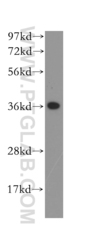
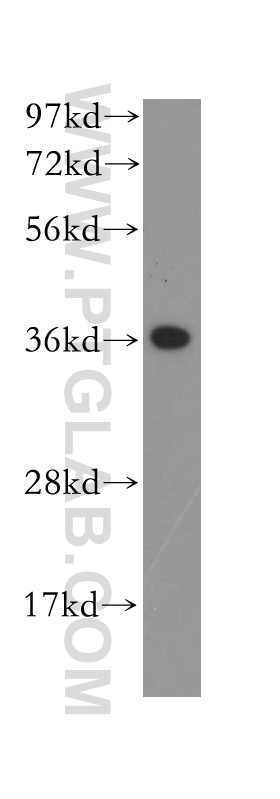
- Experimental details
- The ANKRD1 antibody from Proteintech is a rabbit polyclonal antibody to a recombinant protein of human ANKRD1. This antibody recognizes human, mouse, rat antigen. The ANKRD1 antibody has been validated for the following applications: ELISA, WB analysis.