Explore
 Validate
 Learn
Learn Western blot
 ELISA
ELISAAntibody data
- Antibody Data
- Antigen structure
- References [12]
- Comments [0]
- Validations
- Western blot [1]
- Immunohistochemistry [1]
Submit
Validation data
Reference
Comment
Report error
- Product number
- 12465-1-AP - Provider product page

- Provider
- Proteintech Group
- Proper citation
- Proteintech Cat#12465-1-AP, RRID:AB_2078783
- Product name
- CDCA8 antibody
- Antibody type
- Polyclonal
- Description
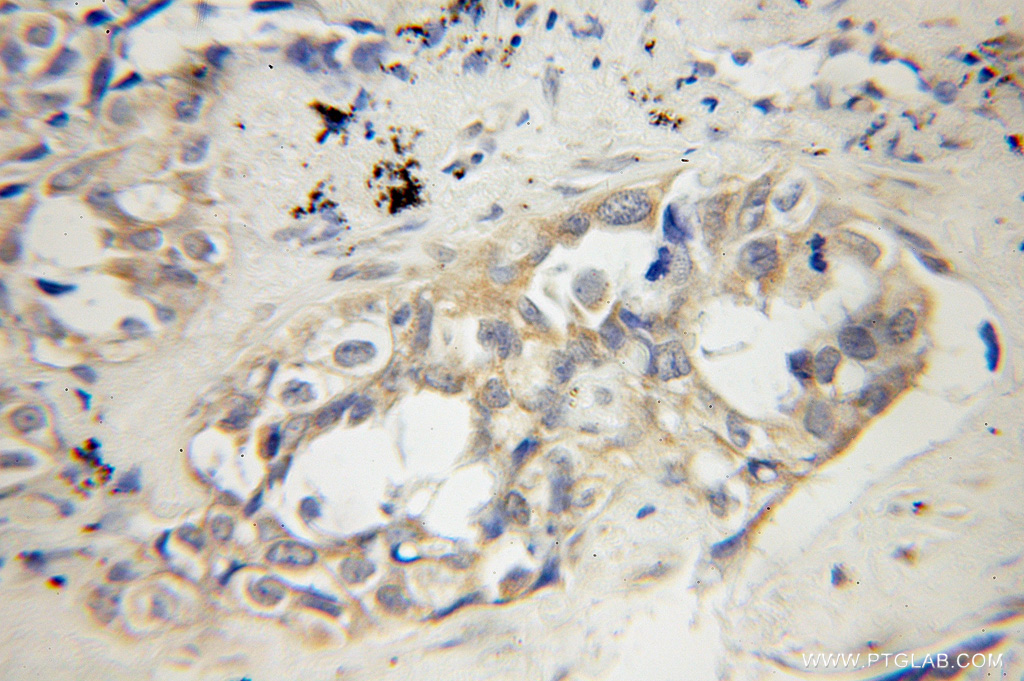
- CDCA8 antibody (Cat. #12465-1-AP) is a rabbit polyclonal antibody that shows reactivity with human, mouse, rat and has been validated for the following applications: IF, IHC, WB,ELISA.
- Reactivity
- Human, Mouse, Rat
- Host
- Rabbit
- Conjugate
- Unconjugated
- Isotype
- IgG
- Vial size
- 20ul, 150ul
Submitted references Regulator of chromosome condensation 1 promotes hepatocellular carcinoma proliferation via cell-division-cycle-associated-8 dependent phosphoinositide 3-kinase/protein kinase B signaling.
Roles of the CDCA gene family in breast carcinoma.
A nonenzymatic dependency on inositol-requiring enzyme 1 controls cancer cell cycle progression and tumor growth.
Single-cell RNA sequencing analysis reveals potential key prognostic markers in hepatocellular carcinoma.
MiR-490-3p promotes cell apoptosis and cell-cycle arrest in osteosarcoma via the modulation of CDCA8/ATF3 by targeting NUSAP1.
TuBG1 promotes hepatocellular carcinoma via ATR/P53-apoptosis and cycling pathways.
Cell division cycle associated 8 promotes the growth and inhibits the apoptosis of endometrial cancer cells by regulating cell cycle and P53/Rb signaling pathway.
A novel risk model of three SUMOylation genes based on RNA expression for potential prognosis and treatment sensitivity prediction in kidney cancer.
Let-7c-5p down-regulates immune-related CDCA8 to inhibit hepatocellular carcinoma.
Global phosphoproteomic analysis identified key kinases regulating male meiosis in mouse.
Cell division cycle associated 8: A novel diagnostic and prognostic biomarker for hepatocellular carcinoma.
ESCRT-III governs the Aurora B-mediated abscission checkpoint through CHMP4C.
Wang YT, Yong YL, Liu ZK, Shen YX, Yang XM, Chen ZN
World journal of gastrointestinal oncology 2025 Jun 15;17(6):106080
World journal of gastrointestinal oncology 2025 Jun 15;17(6):106080
Roles of the CDCA gene family in breast carcinoma.
Ding W, Han W, Shi CT, Yao LQ, Liang ZW, Zhou MH, Wang HN
Science progress 2025 Jan-Mar;108(1):368504241312305
Science progress 2025 Jan-Mar;108(1):368504241312305
A nonenzymatic dependency on inositol-requiring enzyme 1 controls cancer cell cycle progression and tumor growth.
Zuazo-Gaztelu I, Lawrence D, Oikonomidi I, Marsters S, Pechuan-Jorge X, Gaspar CJ, Kan D, Segal E, Clark K, Beresini M, Braun MG, Rudolph J, Modrusan Z, Choi M, Sandoval W, Reichelt M, DeWitt DC, Kujala P, van Dijk S, Klumperman J, Ashkenazi A
PLoS biology 2025 Apr;23(4):e3003086
PLoS biology 2025 Apr;23(4):e3003086
Single-cell RNA sequencing analysis reveals potential key prognostic markers in hepatocellular carcinoma.
Cui H, Yang W
Discover oncology 2024 Dec 4;15(1):747
Discover oncology 2024 Dec 4;15(1):747
MiR-490-3p promotes cell apoptosis and cell-cycle arrest in osteosarcoma via the modulation of CDCA8/ATF3 by targeting NUSAP1.
Wang H, Wang H, Liu Z, Wu P, Dai R, Hong D, Nakamura T, Ren W
Translational pediatrics 2024 Dec 31;13(12):2242-2253
Translational pediatrics 2024 Dec 31;13(12):2242-2253
TuBG1 promotes hepatocellular carcinoma via ATR/P53-apoptosis and cycling pathways.
Zhang Y, Wang ZZ, Han AQ, Yang MY, Zhu LX, Pan FM, Wang Y
Hepatobiliary & pancreatic diseases international : HBPD INT 2024 Apr;23(2):195-209
Hepatobiliary & pancreatic diseases international : HBPD INT 2024 Apr;23(2):195-209
Cell division cycle associated 8 promotes the growth and inhibits the apoptosis of endometrial cancer cells by regulating cell cycle and P53/Rb signaling pathway.
Li W, Qin Y, Chen X, Wang X
American journal of translational research 2023;15(6):3864-3881
American journal of translational research 2023;15(6):3864-3881
A novel risk model of three SUMOylation genes based on RNA expression for potential prognosis and treatment sensitivity prediction in kidney cancer.
Li SC, Yan LJ, Wei XL, Jia ZK, Yang JJ, Ning XH
Frontiers in pharmacology 2023;14:1038457
Frontiers in pharmacology 2023;14:1038457
Let-7c-5p down-regulates immune-related CDCA8 to inhibit hepatocellular carcinoma.
Chen W, Wang H, Shen Y, Wang S, Liu D, Zhao H, Wang G, Huang F, Wang W, Wu R, Hou L, Ye Z, Zhang X, Geng X, Yu X
Functional & integrative genomics 2023 Feb 4;23(1):56
Functional & integrative genomics 2023 Feb 4;23(1):56
Global phosphoproteomic analysis identified key kinases regulating male meiosis in mouse.
Li H, Chen H, Zhang X, Qi Y, Wang B, Cui Y, Ren J, Zhao Y, Chen Y, Zhu T, Wang Y, Yao L, Guo Y, Zhu H, Li Y, Situ C, Guo X
Cellular and molecular life sciences : CMLS 2022 Aug 5;79(8):467
Cellular and molecular life sciences : CMLS 2022 Aug 5;79(8):467
Cell division cycle associated 8: A novel diagnostic and prognostic biomarker for hepatocellular carcinoma.
Cui XH, Peng QJ, Li RZ, Lyu XJ, Zhu CF, Qin XH
Journal of cellular and molecular medicine 2021 Dec;25(24):11097-11112
Journal of cellular and molecular medicine 2021 Dec;25(24):11097-11112
ESCRT-III governs the Aurora B-mediated abscission checkpoint through CHMP4C.
Carlton JG, Caballe A, Agromayor M, Kloc M, Martin-Serrano J
Science (New York, N.Y.) 2012 Apr 13;336(6078):220-5
Science (New York, N.Y.) 2012 Apr 13;336(6078):220-5
No comments: Submit comment
Supportive validation
- Submitted by
- Proteintech Group (provider)
- Main image
- Experimental details
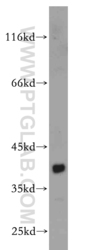
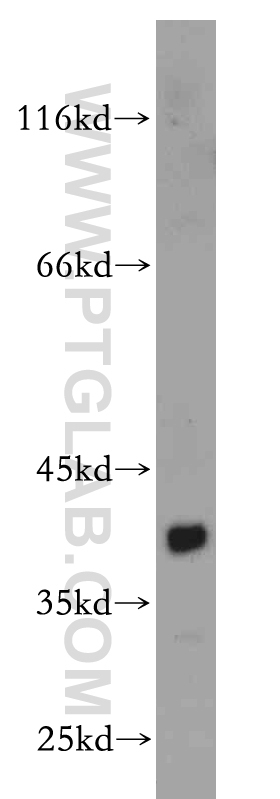
- mouse kidney tissue were subjected to SDS PAGE followed by western blot with 12465-1-AP(CDCA8 antibody) at dilution of 1:300
- Sample type
- tissue
Supportive validation
- Submitted by
- Proteintech Group (provider)
- Main image
- Experimental details
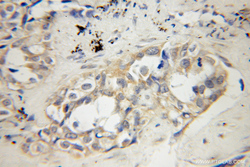
- The CDCA8 antibody from Proteintech is a rabbit polyclonal antibody to a recombinant protein of human CDCA8. This antibody recognizes human, mouse, rat antigen. The CDCA8 antibody has been validated for the following applications: ELISA, WB, IHC analysis.