Explore
 Validate
 Learn
Learn Western blot
 ELISA
ELISAAntibody data
- Antibody Data
- Antigen structure
- References [10]
- Comments [0]
- Validations
- Western blot [1]
Submit
Validation data
Reference
Comment
Report error
- Product number
- 10398-1-AP - Provider product page

- Provider
- Proteintech Group
- Proper citation
- Proteintech Cat#10398-1-AP, RRID:AB_2180460
- Product name
- BAP1 antibody
- Antibody type
- Polyclonal
- Description
- BAP1 antibody (Cat. #10398-1-AP) is a rabbit polyclonal antibody that shows reactivity with human, mouse and has been validated for the following applications: IHC, IP, WB,ELISA.
- Reactivity
- Human, Mouse
- Host
- Rabbit
- Conjugate
- Unconjugated
- Isotype
- IgG
- Vial size
- 20ul, 150ul
Submitted references BAP1 Represses Sequential Activation of IRAKs and NF-κB Signaling in Pancreatic Cancer.
TRACERx analysis identifies a role for FAT1 in regulating chromosomal instability and whole-genome doubling via Hippo signalling.
The SIRT6/BAP1/xCT signaling axis mediates ferroptosis in cisplatin-induced AKI.
Hypoxia-induced BAP1 enhances erastin-induced ferroptosis in nasopharyngeal carcinoma by stabilizing H2A.
BAP1 regulates HSF1 activity and cancer immunity in pancreatic cancer.
MiR-31-5p alleviates septic cardiomyopathy by targeting BAP1 to inhibit SLC7A11 deubiquitination and ferroptosis.
Conjugated fatty acids drive ferroptosis through chaperone-mediated autophagic degradation of GPX4 by targeting mitochondria.
Centrosomal protein 120 promotes centrosome amplification and gastric cancer progression via USP54-mediated deubiquitination of PLK4.
Basis of the H2AK119 specificity of the Polycomb repressive deubiquitinase.
USP22 Deubiquitinates CD274 to Suppress Anticancer Immunity.
Zhao Y, Liang X, Wei R, Guo F, Qin G, Yu H, Liu J, Xia W, Gou S, Wu H, Zhou Y
International journal of biological sciences 2025;21(5):1949-1965
International journal of biological sciences 2025;21(5):1949-1965
TRACERx analysis identifies a role for FAT1 in regulating chromosomal instability and whole-genome doubling via Hippo signalling.
Lu WT, Zalmas LP, Bailey C, Black JRM, Martinez-Ruiz C, Pich O, Gimeno-Valiente F, Usaite I, Magness A, Thol K, Webber TA, Jiang M, Saunders RE, Liu YH, Biswas D, Ige EO, Aerne B, Grönroos E, Venkatesan S, Stavrou G, Karasaki T, Al Bakir M, Renshaw M, Xu H, Schneider-Luftman D, Sharma N, Tovini L, TRACERx Consortium, Jamal-Hanjani M, McClelland SE, Litchfield K, Birkbak NJ, Howell M, Tapon N, Fugger K, McGranahan N, Bartek J, Kanu N, Swanton C
Nature cell biology 2025 Jan;27(1):154-168
Nature cell biology 2025 Jan;27(1):154-168
The SIRT6/BAP1/xCT signaling axis mediates ferroptosis in cisplatin-induced AKI.
Yang S, Chen L, Din S, Ye Z, Zhou X, Cheng F, Li W
Cellular signalling 2025 Jan;125:111479
Cellular signalling 2025 Jan;125:111479
Hypoxia-induced BAP1 enhances erastin-induced ferroptosis in nasopharyngeal carcinoma by stabilizing H2A.
Cai W, Wu S, Lin Z, Ming X, Yang X, Yang M, Chen X
Cancer cell international 2024 Sep 8;24(1):307
Cancer cell international 2024 Sep 8;24(1):307
BAP1 regulates HSF1 activity and cancer immunity in pancreatic cancer.
Yuan W, Zhang Q, Zhao Y, Xia W, Yin S, Liang X, Chen T, Li G, Liu Y, Liu Z, Huang J
Journal of experimental & clinical cancer research : CR 2024 Sep 30;43(1):275
Journal of experimental & clinical cancer research : CR 2024 Sep 30;43(1):275
MiR-31-5p alleviates septic cardiomyopathy by targeting BAP1 to inhibit SLC7A11 deubiquitination and ferroptosis.
Liu Y, Hu N, Ai B, Xia H, Li W
BMC cardiovascular disorders 2024 May 30;24(1):286
BMC cardiovascular disorders 2024 May 30;24(1):286
Conjugated fatty acids drive ferroptosis through chaperone-mediated autophagic degradation of GPX4 by targeting mitochondria.
Hirata Y, Yamada Y, Taguchi S, Kojima R, Masumoto H, Kimura S, Niijima T, Toyama T, Kise R, Sato E, Uchida Y, Ito J, Nakagawa K, Taguchi T, Inoue A, Saito Y, Noguchi T, Matsuzawa A
Cell death & disease 2024 Dec 6;15(12):884
Cell death & disease 2024 Dec 6;15(12):884
Centrosomal protein 120 promotes centrosome amplification and gastric cancer progression via USP54-mediated deubiquitination of PLK4.
Zhang C, Ma X, Wei G, Zhu X, Hu P, Chen X, Wang D, Li Y, Ruan T, Zhang W, Tao K, Wu C
iScience 2023 Jan 20;26(1):105745
iScience 2023 Jan 20;26(1):105745
Basis of the H2AK119 specificity of the Polycomb repressive deubiquitinase.
Ge W, Yu C, Li J, Yu Z, Li X, Zhang Y, Liu CP, Li Y, Tian C, Zhang X, Li G, Zhu B, Xu RM
Nature 2023 Apr;616(7955):176-182
Nature 2023 Apr;616(7955):176-182
USP22 Deubiquitinates CD274 to Suppress Anticancer Immunity.
Huang X, Zhang Q, Lou Y, Wang J, Zhao X, Wang L, Zhang X, Li S, Zhao Y, Chen Q, Liang T, Bai X
Cancer immunology research 2019 Oct;7(10):1580-1590
Cancer immunology research 2019 Oct;7(10):1580-1590
No comments: Submit comment
Supportive validation
- Submitted by
- Proteintech Group (provider)
- Main image
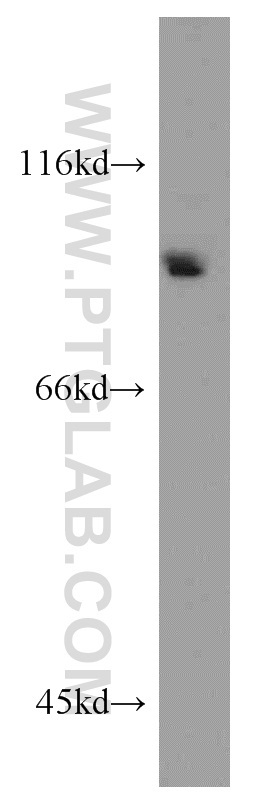
- Experimental details
- The BAP1 antibody from Proteintech is a rabbit polyclonal antibody to a recombinant protein of human BAP1. This antibody recognizes human antigen. The BAP1 antibody has been validated for the following applications: ELISA, WB analysis.