Explore
 Validate
 Learn
Learn Western blot
 ELISA
ELISAAntibody data
- Antibody Data
- Antigen structure
- References [12]
- Comments [0]
- Validations
- Western blot [1]
Submit
Validation data
Reference
Comment
Report error
- Product number
- 14236-1-AP - Provider product page

- Provider
- Proteintech Group
- Proper citation
- Proteintech Cat#14236-1-AP, RRID:AB_10596924
- Product name
- LIV-1/ZIP6 antibody
- Antibody type
- Polyclonal
- Description
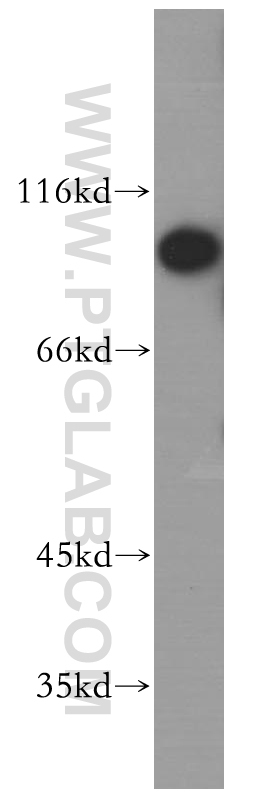
- KD/KO validated LIV-1/ZIP6 antibody (Cat. #14236-1-AP) is a rabbit polyclonal antibody that shows reactivity with human, mouse, rat and has been validated for the following applications: IHC, WB, ELISA.
- Reactivity
- Human, Mouse, Rat
- Host
- Rabbit
- Conjugate
- Unconjugated
- Isotype
- IgG
- Vial size
- 20ul, 150ul
Submitted references DNA aptamer targeting zinc transporters ZIP10 and ZIP6 on cancer cells.
Mechanism and regulatory strategy study on promoting vascularized bone regeneration via intracellular zinc ion transport.
Zinc nanoparticles from oral supplements accumulate in renal tumours and stimulate antitumour immune responses.
Zinc-glutathione mitigates alcohol-induced intestinal and hepatic injury by modulating intestinal zinc-transporters in mice.
Expression of cell surface zinc transporter LIV1 in triple negative breast cancer is an indicator of poor prognosis and therapy failure.
Role of SLC39A6 in the development and progression of liver cancer.
SLC39A6/ZIP6 is essential for zinc homeostasis and T-cell development in zebrafish.
Co-expression analysis revealed PTCH1-3'UTR promoted cell migration and invasion by activating miR-101-3p/SLC39A6 axis in non-small cell lung cancer: implicating the novel function of PTCH1.
Solute Carrier Family 39 Member 6 Gene Promotes Aggressiveness of Esophageal Carcinoma Cells by Increasing Intracellular Levels of Zinc, Activating Phosphatidylinositol 3-Kinase Signaling, and Up-regulating Genes That Regulate Metastasis.
miR-192, a prognostic indicator, targets the SLC39A6/SNAIL pathway to reduce tumor metastasis in human hepatocellular carcinoma.
SLC39A6: a potential target for diagnosis and therapy of esophageal carcinoma.
Genome-wide association study identifies common variants in SLC39A6 associated with length of survival in esophageal squamous-cell carcinoma.
Long Z, Bing T, Zhang N, Zu S, Sheng J, Zhang X, Liu X, Shangguan D
Talanta 2025 Sep 1;292:128000
Talanta 2025 Sep 1;292:128000
Mechanism and regulatory strategy study on promoting vascularized bone regeneration via intracellular zinc ion transport.
Liu Y, Liu S, Du J, Xu J, Li J, Guo L, Liu Y
Bioactive materials 2025 Nov;53:875-892
Bioactive materials 2025 Nov;53:875-892
Zinc nanoparticles from oral supplements accumulate in renal tumours and stimulate antitumour immune responses.
Zeng X, Wang Z, Zhao A, Wu Y, Wang Z, Wu A, Wang Q, Xia X, Chen X, Zhao W, Li B, Lu Z, Lv Q, Li G, Zuo Z, Wu F, Zhao Y, Wang T, Nie G, Li S, Zhang G
Nature materials 2025 Feb;24(2):287-296
Nature materials 2025 Feb;24(2):287-296
Zinc-glutathione mitigates alcohol-induced intestinal and hepatic injury by modulating intestinal zinc-transporters in mice.
Feng Y, Liu Y, Liu W, Ding X, James Kang Y
The Journal of nutritional biochemistry 2024 Oct;132:109697
The Journal of nutritional biochemistry 2024 Oct;132:109697
Expression of cell surface zinc transporter LIV1 in triple negative breast cancer is an indicator of poor prognosis and therapy failure.
Saravanan R, Balasubramanian V, Sundaram S, Dev B, Vittalraj P, Pitani RS, Shanmugasundaram G, Rayala SK, Venkatraman G
Journal of cellular physiology 2024 Apr;239(4):e31203
Journal of cellular physiology 2024 Apr;239(4):e31203
Role of SLC39A6 in the development and progression of liver cancer.
Wan Z, Wang X
Oncology letters 2022 Mar;23(3):77
Oncology letters 2022 Mar;23(3):77
SLC39A6/ZIP6 is essential for zinc homeostasis and T-cell development in zebrafish.
Zhao L, Tan J, Li D, Jiang L, Li T, Yang Y, Wang G, Shang Z, Wang J, Zhou J
Biochemical and biophysical research communications 2019 Apr 16;511(4):896-902
Biochemical and biophysical research communications 2019 Apr 16;511(4):896-902
Co-expression analysis revealed PTCH1-3'UTR promoted cell migration and invasion by activating miR-101-3p/SLC39A6 axis in non-small cell lung cancer: implicating the novel function of PTCH1.
Wan X, Kong Z, Chu K, Yi C, Hu J, Qin R, Zhao C, Fu F, Wu H, Li Y, Huang Y
Oncotarget 2018 Jan 12;9(4):4798-4813
Oncotarget 2018 Jan 12;9(4):4798-4813
Solute Carrier Family 39 Member 6 Gene Promotes Aggressiveness of Esophageal Carcinoma Cells by Increasing Intracellular Levels of Zinc, Activating Phosphatidylinositol 3-Kinase Signaling, and Up-regulating Genes That Regulate Metastasis.
Cheng X, Wei L, Huang X, Zheng J, Shao M, Feng T, Li J, Han Y, Tan W, Tan W, Lin D, Wu C
Gastroenterology 2017 Jun;152(8):1985-1997.e12
Gastroenterology 2017 Jun;152(8):1985-1997.e12
miR-192, a prognostic indicator, targets the SLC39A6/SNAIL pathway to reduce tumor metastasis in human hepatocellular carcinoma.
Lian J, Jing Y, Dong Q, Huan L, Chen D, Bao C, Wang Q, Zhao F, Li J, Yao M, Qin L, Liang L, He X
Oncotarget 2016 Jan 19;7(3):2672-83
Oncotarget 2016 Jan 19;7(3):2672-83
SLC39A6: a potential target for diagnosis and therapy of esophageal carcinoma.
Cui XB, Shen YY, Jin TT, Li S, Li TT, Zhang SM, Peng H, Liu CX, Li SG, Yang L, Li N, Hu JM, Jiang JF, Li M, Liang WH, Li Y, Wei YT, Sun ZZ, Wu CY, Chen YZ, Li F
Journal of translational medicine 2015 Oct 6;13:321
Journal of translational medicine 2015 Oct 6;13:321
Genome-wide association study identifies common variants in SLC39A6 associated with length of survival in esophageal squamous-cell carcinoma.
Wu C, Li D, Jia W, Hu Z, Zhou Y, Yu D, Tong T, Wang M, Lin D, Qiao Y, Zhou Y, Chang J, Zhai K, Wang M, Wei L, Tan W, Shen H, Zeng Y, Lin D
Nature genetics 2013 Jun;45(6):632-8
Nature genetics 2013 Jun;45(6):632-8
No comments: Submit comment
Supportive validation
- Submitted by
- Proteintech Group (provider)
- Main image
- Experimental details
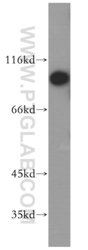
- The LIV-1 antibody from Proteintech is a rabbit polyclonal antibody to a recombinant protein of human LIV-1. This antibody recognizes human,mouse,rat antigen. The LIV-1 antibody has been validated for the following applications: ELISA, WB analysis.