Explore
 Validate
 Learn
Learn Western blot
 ELISA
ELISAAntibody data
- Antibody Data
- Antigen structure
- References [19]
- Comments [0]
- Validations
- Western blot [1]
- Immunohistochemistry [1]
Submit
Validation data
Reference
Comment
Report error
- Product number
- 14073-1-AP - Provider product page

- Provider
- Proteintech Group
- Proper citation
- Proteintech Cat#14073-1-AP, RRID:AB_2194745
- Product name
- SRPK1 antibody
- Antibody type
- Polyclonal
- Description
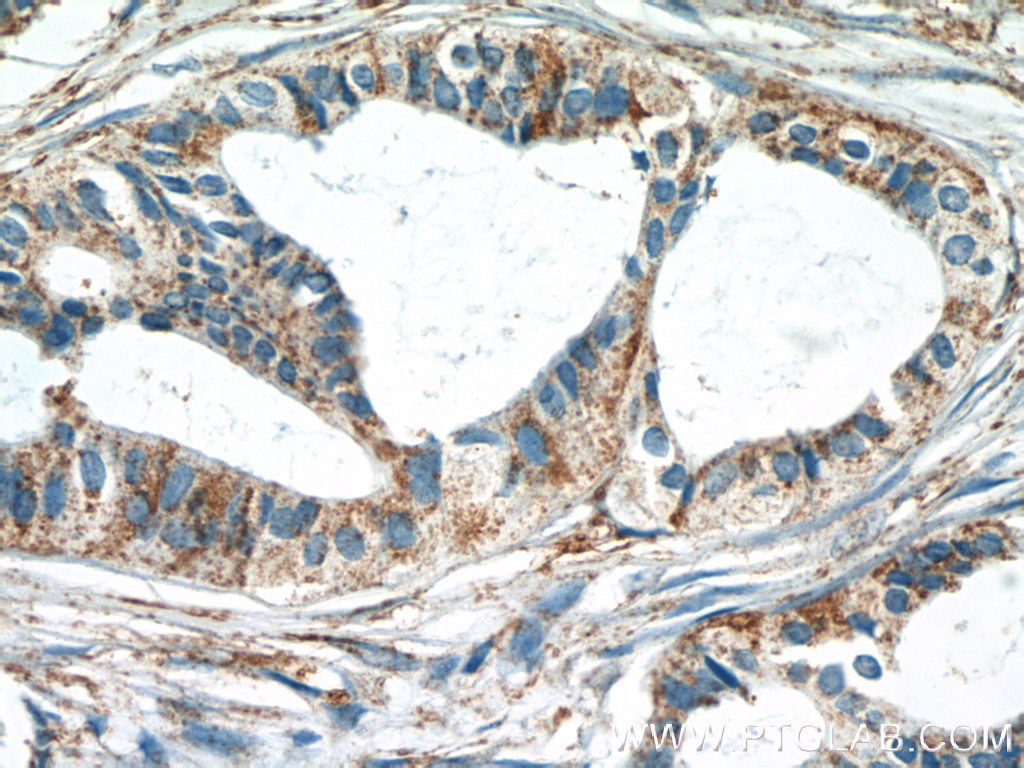
- SRPK1 antibody (Cat. #14073-1-AP) is a rabbit polyclonal antibody that shows reactivity with human, mouse and has been validated for the following applications: FC, IF, IHC, IP, WB,ELISA.
- Reactivity
- Human, Mouse
- Host
- Rabbit
- Conjugate
- Unconjugated
- Isotype
- IgG
- Vial size
- 20ul, 150ul
Submitted references Multiple Roles of Protamine Kinase SRPK1 and Phosphatase PP1γ in Sperm Development.
Transcriptional readthrough precedes alternative splicing programs triggered in CML cells by imatinib.
IMPDH2 facilitates CD4+ T cell activation through AKT/mTOR pathway by upregulating SRPK1 in myasthenia gravis.
SNW1 promotes lymphatic metastasis in bladder cancer by modulating SRPK1 splicing.
Activation of Nerve Growth Factor signaling limits the response to lenvatinib in hepatocellular carcinoma.
TREX2 component PCID2 scaffolds alternative SAC3-based subcomplexes with distinct RNA processing and export function.
eIF3f promotes tumour malignancy by remodelling fatty acid biosynthesis in hepatocellular carcinoma.
A novel lncRNA-mediated signaling axis governs cancer stemness and splicing reprogramming in hepatocellular carcinoma with therapeutic potential.
SRPK1 Activation Facilitates Gli3(S664) Phosphorylation and Promotes Metastasis in Esophageal Squamous Cell Carcinoma.
SRPK1 facilitates IBDV replication by phosphorylating VP1 at S48.
Post-transcriptional regulation of diabetic wound healing by junctional adhesion molecule A/miR-106b axis.
SRPK1 is a significant factor in driving the progression of diabetic kidney fibrosis.
CDK12-inactivation-induced MYC signaling causes dependency on the splicing kinase SRPK1.
LncRNA-LncDACH1 mediated phenotypic switching of smooth muscle cells during neointimal hyperplasia in male arteriovenous fistulas.
A cell-penetrant peptide blocking C9ORF72-repeat RNA nuclear export reduces the neurotoxic effects of dipeptide repeat proteins.
MiR-659-3p inhibits osteosarcoma progression and metastasis by inhibiting cell proliferation and invasion via targeting SRPK1.
DRAK2 aggravates nonalcoholic fatty liver disease progression through SRSF6-associated RNA alternative splicing.
Clinical and functional significance of CHK1-S, an alternatively spliced isoform of the CHK1 gene, in hepatocellular carcinoma.
Novel RNA-Affinity Proteogenomics Dissects Tumor Heterogeneity for Revealing Personalized Markers in Precision Prognosis of Cancer.
de la Iglesia A, Blanco M, Jodar M, Feudjio O, Leduc M, Castillo J, Cocquet J, Oliva R
Proteomics 2026 Mar 30;:e70121
Proteomics 2026 Mar 30;:e70121
Transcriptional readthrough precedes alternative splicing programs triggered in CML cells by imatinib.
Podszywałow-Bartnicka P, Shine M, Lin J, Neugebauer KM
Science advances 2026 Mar 20;12(12):eaea2475
Science advances 2026 Mar 20;12(12):eaea2475
IMPDH2 facilitates CD4+ T cell activation through AKT/mTOR pathway by upregulating SRPK1 in myasthenia gravis.
Ren Y, Wu T, Liu Z, Li L, Li Y, Xin G, Peng S, Niu J, Chen B, Cai H, Tian Q, Wang L, Zhang H
Clinical immunology (Orlando, Fla.) 2026 Jan;282:110634
Clinical immunology (Orlando, Fla.) 2026 Jan;282:110634
SNW1 promotes lymphatic metastasis in bladder cancer by modulating SRPK1 splicing.
Hu J, Zhu Y, Wang G, Dai H, Han H, Cao W, Ding M, Diao W, Lu Q, Zhang Q, Guo H, Chen W
iScience 2026 Feb 20;29(2):114811
iScience 2026 Feb 20;29(2):114811
Activation of Nerve Growth Factor signaling limits the response to lenvatinib in hepatocellular carcinoma.
Xu M, Zheng Y, Zhao L, Wang S, Chen J, Fu Z, Ma A, Liang B, Huang Y, Xu H, Wang Y, Ai Y, Zeng H, Gao C, Cai J, Ke A, Fan J
Signal transduction and targeted therapy 2026 Apr 5;11(1)
Signal transduction and targeted therapy 2026 Apr 5;11(1)
TREX2 component PCID2 scaffolds alternative SAC3-based subcomplexes with distinct RNA processing and export function.
Aksenova V, Giordano E, Esnault-Petrov C, Arnaoutov A, Dasso M
bioRxiv : the preprint server for biology 2026 Apr 14;
bioRxiv : the preprint server for biology 2026 Apr 14;
eIF3f promotes tumour malignancy by remodelling fatty acid biosynthesis in hepatocellular carcinoma.
Zhou S, Zhang L, You Y, Yu K, Tie X, Gao Y, Chen Y, Yao F, Zhang R, Hao X, Fang C, Li X, Li Q, Wang X
Journal of hepatology 2025 Sep;83(3):712-728
Journal of hepatology 2025 Sep;83(3):712-728
A novel lncRNA-mediated signaling axis governs cancer stemness and splicing reprogramming in hepatocellular carcinoma with therapeutic potential.
Si K, Zhang L, Jiang Z, Wu Z, Wu Z, Chen Y, Liang W, Zhang X, Zhang W
Journal of experimental & clinical cancer research : CR 2025 Oct 9;44(1):287
Journal of experimental & clinical cancer research : CR 2025 Oct 9;44(1):287
SRPK1 Activation Facilitates Gli3(S664) Phosphorylation and Promotes Metastasis in Esophageal Squamous Cell Carcinoma.
Ding Y, Qin J, Zhang M, Wu H, Liu C, Guo Y, Wu W, Jiang Y, Zhang C, Ma Y, Chen X, Lu J, Liu K, Dong Z, Zhao J, Qiao Y
Molecular carcinogenesis 2025 Jul;64(7):1168-1181
Molecular carcinogenesis 2025 Jul;64(7):1168-1181
SRPK1 facilitates IBDV replication by phosphorylating VP1 at S48.
Zeng Q, Chen Z, Huang Y, Fu Q, Chen Z, Wu H
International journal of biological macromolecules 2025 Feb;291:139002
International journal of biological macromolecules 2025 Feb;291:139002
Post-transcriptional regulation of diabetic wound healing by junctional adhesion molecule A/miR-106b axis.
Gong T, Fan X, Wu M, Chen Z, Xia Z
Burns : journal of the International Society for Burn Injuries 2025 Aug;51(6):107527
Burns : journal of the International Society for Burn Injuries 2025 Aug;51(6):107527
SRPK1 is a significant factor in driving the progression of diabetic kidney fibrosis.
Han S, Ma S, Liu K, Qi R, Wang G, Qin W, Zhang X
Diabetology & metabolic syndrome 2025 Aug 6;17(1):316
Diabetology & metabolic syndrome 2025 Aug 6;17(1):316
CDK12-inactivation-induced MYC signaling causes dependency on the splicing kinase SRPK1.
Liang J, Gondane A, Itkonen HM
Molecular oncology 2024 Oct;18(10):2510-2523
Molecular oncology 2024 Oct;18(10):2510-2523
LncRNA-LncDACH1 mediated phenotypic switching of smooth muscle cells during neointimal hyperplasia in male arteriovenous fistulas.
Li Z, Zhao Y, Pan Z, Cai B, Zhang C, Jiao J
Nature communications 2024 May 3;15(1):3743
Nature communications 2024 May 3;15(1):3743
A cell-penetrant peptide blocking C9ORF72-repeat RNA nuclear export reduces the neurotoxic effects of dipeptide repeat proteins.
Castelli LM, Lin YH, Sanchez-Martinez A, Gül A, Mohd Imran K, Higginbottom A, Upadhyay SK, Márkus NM, Rua Martins R, Cooper-Knock J, Montmasson C, Cohen R, Walton A, Bauer CS, De Vos KJ, Mead RJ, Azzouz M, Dominguez C, Ferraiuolo L, Shaw PJ, Whitworth AJ, Hautbergue GM
Science translational medicine 2023 Mar;15(685):eabo3823
Science translational medicine 2023 Mar;15(685):eabo3823
MiR-659-3p inhibits osteosarcoma progression and metastasis by inhibiting cell proliferation and invasion via targeting SRPK1.
Gong Y, Wei ZR
BMC cancer 2022 Aug 29;22(1):934
BMC cancer 2022 Aug 29;22(1):934
DRAK2 aggravates nonalcoholic fatty liver disease progression through SRSF6-associated RNA alternative splicing.
Li Y, Xu J, Lu Y, Bian H, Yang L, Wu H, Zhang X, Zhang B, Xiong M, Chang Y, Tang J, Yang F, Zhao L, Li J, Gao X, Xia M, Tan M, Li J
Cell metabolism 2021 Oct 5;33(10):2004-2020.e9
Cell metabolism 2021 Oct 5;33(10):2004-2020.e9
Clinical and functional significance of CHK1-S, an alternatively spliced isoform of the CHK1 gene, in hepatocellular carcinoma.
Hu G, Wang S, Wang Y, Gao Y, Zhu H, Liu M, Xu N, Wang L
Journal of Cancer 2020;11(7):1792-1799
Journal of Cancer 2020;11(7):1792-1799
Novel RNA-Affinity Proteogenomics Dissects Tumor Heterogeneity for Revealing Personalized Markers in Precision Prognosis of Cancer.
Wang L, Wrobel JA, Xie L, Li D, Zurlo G, Shen H, Yang P, Wang Z, Peng Y, Gunawardena HP, Zhang Q, Chen X
Cell chemical biology 2018 May 17;25(5):619-633.e5
Cell chemical biology 2018 May 17;25(5):619-633.e5
No comments: Submit comment
Supportive validation
- Submitted by
- Proteintech Group (provider)
- Main image
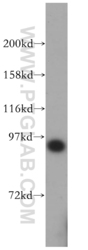
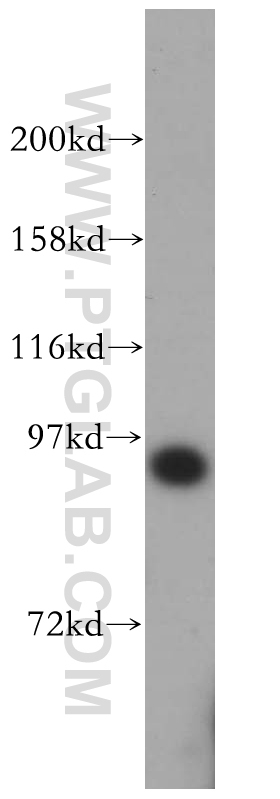
- Experimental details
- Jurkat cells were subjected to SDS PAGE followed by western blot with 14073-1-AP(SRPK1 antibody) at dilution of 1:1000
- Sample type
- cell line
Supportive validation
- Submitted by
- Proteintech Group (provider)
- Main image
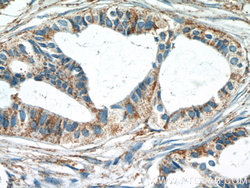
- Experimental details
- The SRPK1 antibody from Proteintech is a rabbit polyclonal antibody to a recombinant protein of human SRPK1. This antibody recognizes human,mouse,rat antigen. The SRPK1 antibody has been validated for the following applications: ELISA, WB, IHC analysis.