Explore
 Validate
 Learn
Learn Western blot
 ELISA
ELISAAntibody data
- Antibody Data
- Antigen structure
- References [22]
- Comments [0]
- Validations
- Western blot [1]
Submit
Validation data
Reference
Comment
Report error
- Product number
- 11602-1-AP - Provider product page

- Provider
- Proteintech Group
- Proper citation
- Proteintech Cat#11602-1-AP, RRID:AB_2067153
- Product name
- C1qA antibody
- Antibody type
- Polyclonal
- Description
- C1qA antibody (Cat. #11602-1-AP) is a rabbit polyclonal antibody that shows reactivity with human, mouse, rat and has been validated for the following applications: IP, WB,ELISA.
- Reactivity
- Human, Mouse, Rat
- Host
- Rabbit
- Conjugate
- Unconjugated
- Isotype
- IgG
- Vial size
- 20ul, 150ul
Submitted references Lysophosphatidic acid derivative is a novel candidate of therapeutic agents for a mouse model of frontotemporal dementia with progranulin deficiency.
6-Chloronicotinic Acid Induces Toxicity in Mouse Neural Stem Cells via the C3ar1 Signaling.
Xixin Decoction May Treat Vascular Dementia by Modulating the NPTX2/C1q/C3 Complement Pathway.
PDE4 inhibition alleviates HMGB1/C1q/C3-mediated excessive phagocytic pruning of synapses by microglia and depressive-like behaviors in mice.
GABA-dependent microglial elimination of inhibitory synapses underlies neuronal hyperexcitability in epilepsy.
Small intestinal γδ T17 cells promote SAE through STING/C1q-induced microglial synaptic pruning in male mice.
Identification of Immune Candidate Genes in Post-Sepsis Syndrome: Linking Innate Immunity to Long-Term Autoimmune Responses.
Cellular Landscape of Synovial Chondromatosis Synovium Revealed by Single-Cell RNA Sequencing.
Lymphoid gene expression supports neuroprotective microglia function.
Gut-derived bacterial vesicles carrying lipopolysaccharide promote microglia-mediated synaptic pruning.
A RANKL-UCHL1-sCD13 negative feedback loop limits osteoclastogenesis in subchondral bone to prevent osteoarthritis progression.
Cognitive impairment in Alzheimer's disease FAD(4T) mouse model: Synaptic loss facilitated by activated microglia via C1qA.
The small nucleolar RNA SNORA51 enhances breast cancer stem cell-like properties via the RPL3/NPM1/c-MYC pathway.
Single-cell RNA profiling reveals classification and characteristics of mononuclear phagocytes in colorectal cancer.
STING Driving Synaptic Phagocytosis of Hippocampal Microglia/Macrophages Contributes to Cognitive Impairment in Sepsis-Associated Encephalopathy in Mice.
Dietary intake of α-ketoglutarate ameliorates α-synuclein pathology in mouse models of Parkinson's disease.
Blocking Two-Pore Domain Potassium Channel TREK-1 Inhibits the Activation of A1-Like Reactive Astrocyte Through the NF-κB Signaling Pathway in a Rat Model of Major Depressive Disorder.
TREM2-independent microgliosis promotes tau-mediated neurodegeneration in the presence of ApoE4.
Cellular heterogeneity and immune microenvironment revealed by single-cell transcriptome in venous malformation and cavernous venous malformation.
Role of uromodulin and complement activation in the progression of kidney disease.
C-reactive protein (CRP) recognizes uric acid crystals and recruits proteases C1 and MASP1.
Immune quiescence of the brain is set by astroglial connexin 43.
Yamamoto N, Takei R, Gotoh M, Miyamoto Y, Hashimoto K
Neurobiology of aging 2026 Feb;158:39-51
Neurobiology of aging 2026 Feb;158:39-51
6-Chloronicotinic Acid Induces Toxicity in Mouse Neural Stem Cells via the C3ar1 Signaling.
He M, Lin Y, Zhang X, Wang S, Yang X, Cui F, Sheng X
Journal of applied toxicology : JAT 2025 May;45(5):783-794
Journal of applied toxicology : JAT 2025 May;45(5):783-794
Xixin Decoction May Treat Vascular Dementia by Modulating the NPTX2/C1q/C3 Complement Pathway.
Yang S, Gao XQ, Tan AH, Ge P
Chemistry & biodiversity 2025 May;22(5):e202402208
Chemistry & biodiversity 2025 May;22(5):e202402208
PDE4 inhibition alleviates HMGB1/C1q/C3-mediated excessive phagocytic pruning of synapses by microglia and depressive-like behaviors in mice.
Zhao Q, Zeng C, Luo F, Xian Z, Wen H, Tu X, Yang R, Sun Y, Zheng X, Xu J, Wang H
Brain, behavior, and immunity 2025 May;126:126-143
Brain, behavior, and immunity 2025 May;126:126-143
GABA-dependent microglial elimination of inhibitory synapses underlies neuronal hyperexcitability in epilepsy.
Chen ZP, Zhao X, Wang S, Cai R, Liu Q, Ye H, Wang MJ, Peng SY, Xue WX, Zhang YX, Li W, Tang H, Huang T, Zhang Q, Li L, Gao L, Zhou H, Hang C, Zhu JN, Li X, Liu X, Cong Q, Yan C
Nature neuroscience 2025 Jul;28(7):1404-1417
Nature neuroscience 2025 Jul;28(7):1404-1417
Small intestinal γδ T17 cells promote SAE through STING/C1q-induced microglial synaptic pruning in male mice.
Wu Y, Zhang Y, Yu Y, Wang X, Zhen Z, Yuan Y, Xie B, Han M, Wang M, Zhang X, Sun X, Wen X, Hashimoto K, Shang Y, Yuan S, Zhang J
Nature communications 2025 Jul 23;16(1):6779
Nature communications 2025 Jul 23;16(1):6779
Identification of Immune Candidate Genes in Post-Sepsis Syndrome: Linking Innate Immunity to Long-Term Autoimmune Responses.
Zhou Y, Wang T, Li Y, Yang Y, Ma S, Sun Y, Lu W, Zhou Y
Journal of innate immunity 2025 Jul 22;17(1):1-28
Journal of innate immunity 2025 Jul 22;17(1):1-28
Cellular Landscape of Synovial Chondromatosis Synovium Revealed by Single-Cell RNA Sequencing.
Zhao H, Jiang F, Zhang P, Bi Y, Shen Y, Ma J, Gong J, Han K, Zhang L, Yu T, Xiao X
FASEB journal : official publication of the Federation of American Societies for Experimental Biology 2025 Jul 15;39(13):e70799
FASEB journal : official publication of the Federation of American Societies for Experimental Biology 2025 Jul 15;39(13):e70799
Lymphoid gene expression supports neuroprotective microglia function.
Ayata P, Crowley JM, Challman MF, Sahasrabuddhe V, Gratuze M, Werneburg S, Ribeiro D, Hays EC, Durán-Laforet V, Faust TE, Hwang P, Mendes Lopes F, Nikopoulou C, Buchholz S, Murphy RE, Mei T, Pimenova AA, Romero-Molina C, Garretti F, Patel TA, De Sanctis C, Ramirez Jimenez AV, Crow M, Weiss FD, Ulrich JD, Marcora E, Murray JW, Meissner F, Beyer A, Hasson D, Crary JF, Schafer DP, Holtzman DM, Goate AM, Tarakhovsky A, Schaefer A
Nature 2025 Dec;648(8092):157-165
Nature 2025 Dec;648(8092):157-165
Gut-derived bacterial vesicles carrying lipopolysaccharide promote microglia-mediated synaptic pruning.
Zhao X, Yu J, Xu B, Xu Z, Lei X, Han S, Luo S, Zhang C, Peng G, Li J, Yu J, Ling Y, Fan Z, Mo W, Yang Y, Zhang J
Alzheimer's & dementia : the journal of the Alzheimer's Association 2025 Aug;21(8):e70331
Alzheimer's & dementia : the journal of the Alzheimer's Association 2025 Aug;21(8):e70331
A RANKL-UCHL1-sCD13 negative feedback loop limits osteoclastogenesis in subchondral bone to prevent osteoarthritis progression.
Liang W, Feng R, Li X, Duan X, Feng S, Chen J, Li Y, Chen J, Liu Z, Wang X, Ruan G, Tang S, Ding C, Huang B, Zou Z, Chen T
Nature communications 2024 Oct 10;15(1):8792
Nature communications 2024 Oct 10;15(1):8792
Cognitive impairment in Alzheimer's disease FAD(4T) mouse model: Synaptic loss facilitated by activated microglia via C1qA.
Zhang C, Qi H, Jia D, Zhao J, Xu C, Liu J, Cui Y, Zhang J, Wang M, Chen M, Tang B
Life sciences 2024 Mar 1;340:122457
Life sciences 2024 Mar 1;340:122457
The small nucleolar RNA SNORA51 enhances breast cancer stem cell-like properties via the RPL3/NPM1/c-MYC pathway.
Li S, Jin Z, Song X, Ma J, Peng Z, Yu H, Song J, Zhang Y, Sun X, He M, Yu X, Jin F, Zheng A
Molecular carcinogenesis 2024 Jun;63(6):1117-1132
Molecular carcinogenesis 2024 Jun;63(6):1117-1132
Single-cell RNA profiling reveals classification and characteristics of mononuclear phagocytes in colorectal cancer.
Ji T, Fu H, Wang L, Chen J, Tian S, Wang G, Wang L, Wang Z
PLoS genetics 2024 Feb;20(2):e1011176
PLoS genetics 2024 Feb;20(2):e1011176
STING Driving Synaptic Phagocytosis of Hippocampal Microglia/Macrophages Contributes to Cognitive Impairment in Sepsis-Associated Encephalopathy in Mice.
Lv X, Jia M, Feng X, Jian JX, Yang JJ, Ma DQ, Ji MH, Diao YG, Shen JC
CNS neuroscience & therapeutics 2024 Dec;30(12):e70166
CNS neuroscience & therapeutics 2024 Dec;30(12):e70166
Dietary intake of α-ketoglutarate ameliorates α-synuclein pathology in mouse models of Parkinson's disease.
Zhang W, Ding L, Zhang M, Zheng S, Ma R, Gong J, Mao H, Xu H, Xu P, Zhang Y
Cellular and molecular life sciences : CMLS 2023 May 19;80(6):155
Cellular and molecular life sciences : CMLS 2023 May 19;80(6):155
Blocking Two-Pore Domain Potassium Channel TREK-1 Inhibits the Activation of A1-Like Reactive Astrocyte Through the NF-κB Signaling Pathway in a Rat Model of Major Depressive Disorder.
Cong T, Sun Y, Zhou Y, Wu H, Li L, Chu Z, Chen X, Li J, Zhao D, Wang Y, Liu Y, Yin S, Xiao Z
Neurochemical research 2023 Jun;48(6):1737-1754
Neurochemical research 2023 Jun;48(6):1737-1754
TREM2-independent microgliosis promotes tau-mediated neurodegeneration in the presence of ApoE4.
Gratuze M, Schlachetzki JCM, D'Oliveira Albanus R, Jain N, Novotny B, Brase L, Rodriguez L, Mansel C, Kipnis M, O'Brien S, Pasillas MP, Lee C, Manis M, Colonna M, Harari O, Glass CK, Ulrich JD, Holtzman DM
Neuron 2023 Jan 18;111(2):202-219.e7
Neuron 2023 Jan 18;111(2):202-219.e7
Cellular heterogeneity and immune microenvironment revealed by single-cell transcriptome in venous malformation and cavernous venous malformation.
Li Y, Yang J, Huang Y, Ge S, Song X, Jia R, Wang Y
Journal of molecular and cellular cardiology 2022 Jan;162:130-143
Journal of molecular and cellular cardiology 2022 Jan;162:130-143
Role of uromodulin and complement activation in the progression of kidney disease.
Shen F, Liu M, Pei F, Yu L, Yang X
Oncology letters 2021 Dec;22(6):829
Oncology letters 2021 Dec;22(6):829
C-reactive protein (CRP) recognizes uric acid crystals and recruits proteases C1 and MASP1.
Alberts A, Klingberg A, Wessig AK, Combes C, Witte T, Brand K, Pich A, Neumann K
Scientific reports 2020 Apr 14;10(1):6391
Scientific reports 2020 Apr 14;10(1):6391
Immune quiescence of the brain is set by astroglial connexin 43.
Boulay AC, Mazeraud A, Cisternino S, Saubaméa B, Mailly P, Jourdren L, Blugeon C, Mignon V, Smirnova M, Cavallo A, Ezan P, Avé P, Dingli F, Loew D, Vieira P, Chrétien F, Cohen-Salmon M
The Journal of neuroscience : the official journal of the Society for Neuroscience 2015 Mar 11;35(10):4427-39
The Journal of neuroscience : the official journal of the Society for Neuroscience 2015 Mar 11;35(10):4427-39
No comments: Submit comment
Supportive validation
- Submitted by
- Proteintech Group (provider)
- Main image
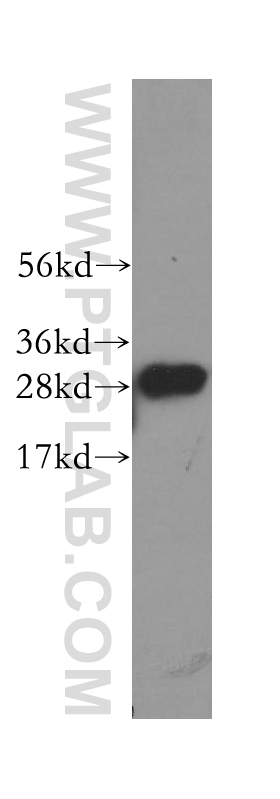
- Experimental details
- The C1QA antibody from Proteintech is a rabbit polyclonal antibody to a recombinant protein of human C1QA. This antibody recognizes human, mouse, rat antigen. The C1QA antibody has been validated for the following applications: ELISA, WB analysis.