Explore
 Validate
 Learn
Learn Western blot
 ELISA
ELISA Immunocytochemistry
Antibody data
- Antibody Data
- Antigen structure
- References [0]
- Comments [0]
- Validations
- Immunocytochemistry [2]
- Chromatin Immunoprecipitation [4]
- Other assay [3]
Submit
Validation data
Reference
Comment
Report error
- Product number
- MA5-33385 - Provider product page

- Provider
- Invitrogen Antibodies
- Product name
- H3K9me1 Recombinant Rabbit Monoclonal Antibody (RM150), ChIP-Verified
- Antibody type
- Monoclonal
- Antigen
- Synthetic peptide
- Description
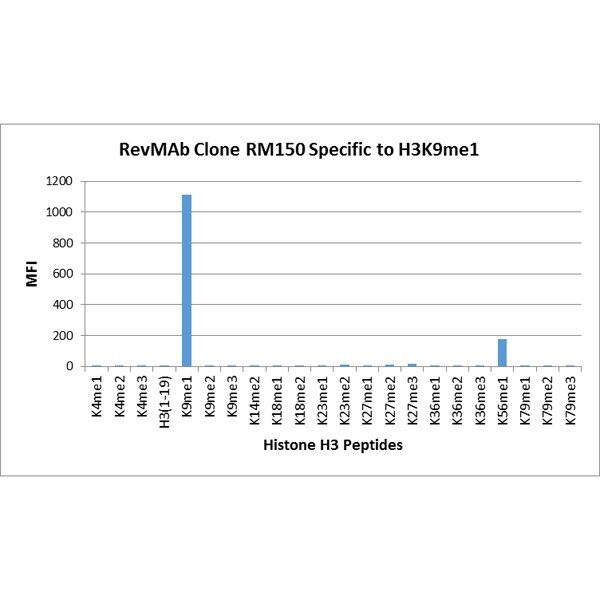
- This product reacts to Histone H3 monomethylated at Lysine 9 (K9me1). No cross reactivity with non-modified Lysine 9, dimethylated Lysine 9 (K9me2), trimethylated Lysine 4 (K9me3), or other methylations in histone H3. Click here for Master Lot linking information.
- Reactivity
- Human
- Host
- Rabbit
- Isotype
- IgG
- Antibody clone number
- RM150
- Vial size
- 100 μg
- Concentration
- 1 mg/mL
- Storage
- -20°C
No comments: Submit comment
Supportive validation
- Submitted by
- Invitrogen Antibodies (provider)
- Main image
- Experimental details
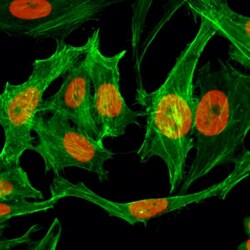
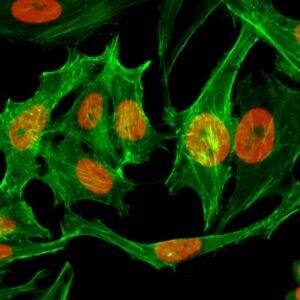
- Immunocytochemistry of HeLa cells treated with sodium butyrate. Samples were probed using a Monomethyl-Histone H3 (Lys9) Recombinant Rabbit Monoclonal Antibody (RM150) (Product # MA5-33385) (red). Actin filaments were labeled with FITC-conjugated phalloidin (green).
- Submitted by
- Invitrogen Antibodies (provider)
- Main image
- Experimental details
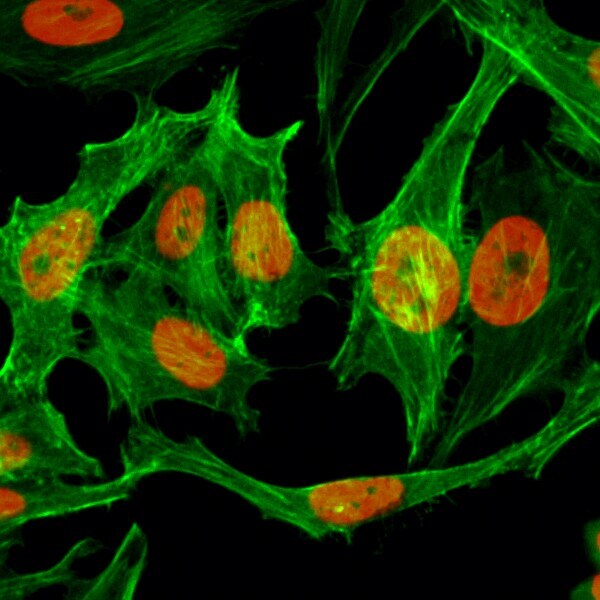
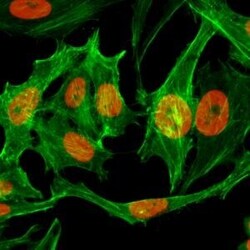
- Immunocytochemistry analysis of HeLa cells, using H3K9me1 Recombinant Monoclonal antibody (Product # MA5-33385) (red). Actin filaments have been labeled with fluorescein phalloidin (green).
Supportive validation
- Submitted by
- Invitrogen Antibodies (provider)
- Main image
- Experimental details
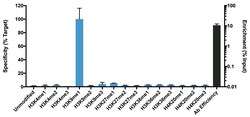
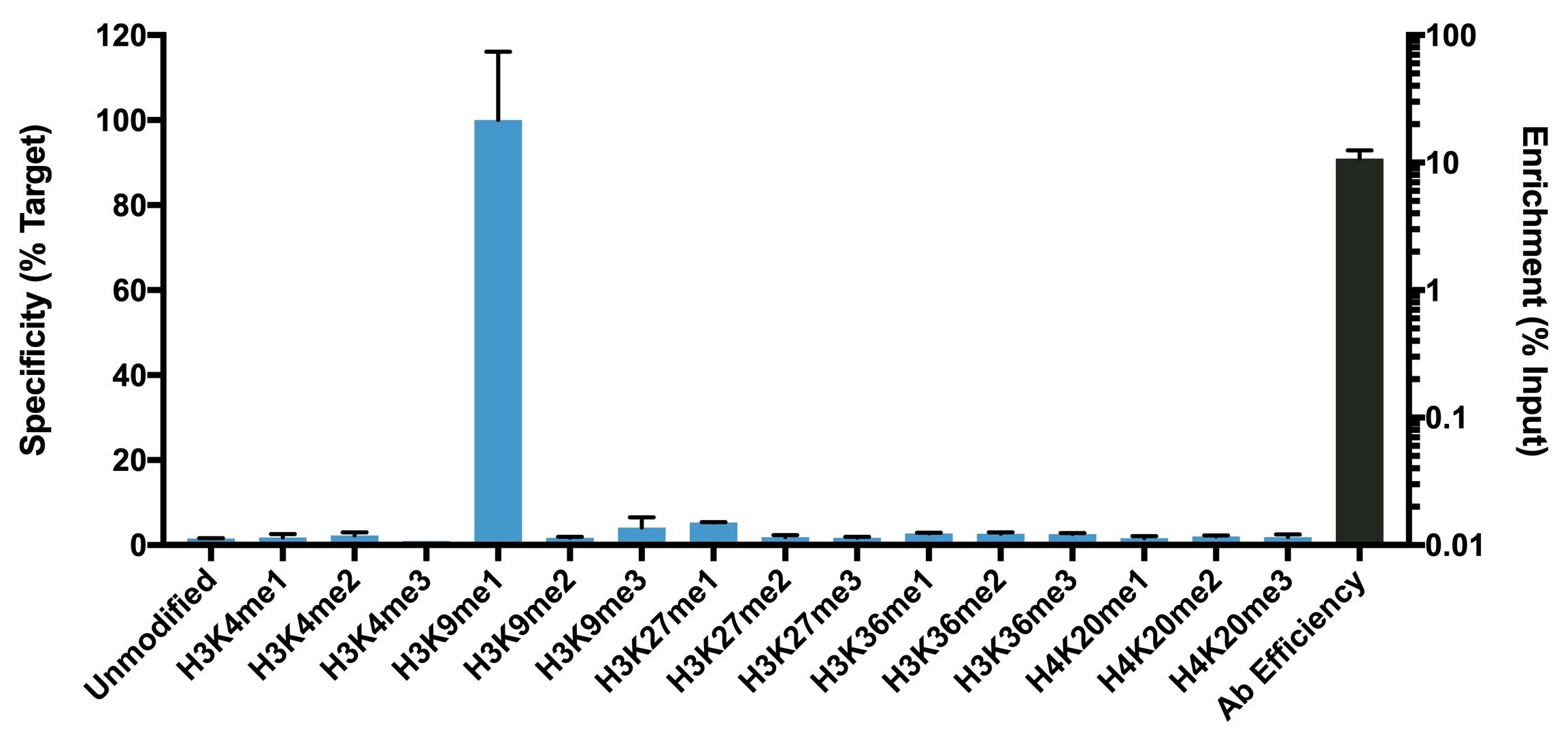
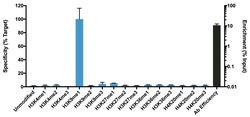
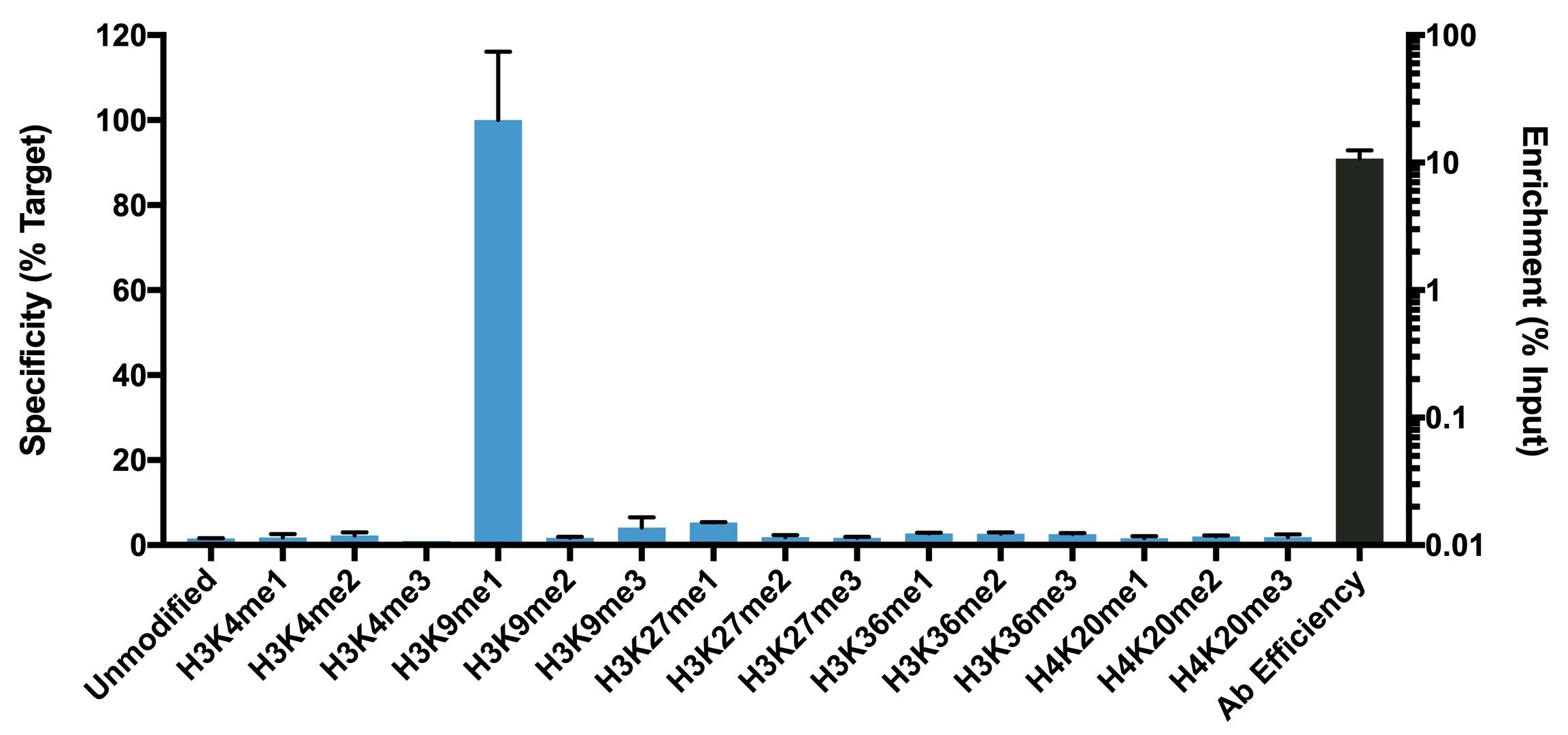
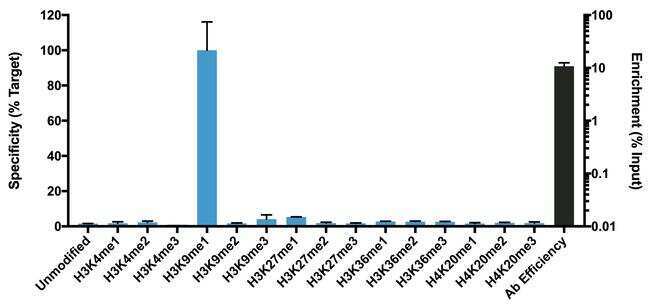
- K-MetStat Panel, SNAP-ChIP™ Spike-in (Product # A47356), a proprietary technology developed by EpiCypher™ was used to analyze the performance of H3K9me1 antibody (Product # MA5-33385) in ChIP. SNAP-ChIP panels consist of a pool of DNA-barcoded recombinant nucleosomes harboring histone PTMs that are spiked-in to a ChIP reaction to assess efficiency and specificity of the antibody. The K-MetStat panel includes an unmodified control plus nucleosomes containing histones with mono, di and tri-methyl forms of lysine residues on histone H3 and H4 as shown on the x-axis. Recovery of each unique DNA-barcoded nucleosome is quantified to determine how much of each PTM is immunoprecipitated in the ChIP reaction (for more information see reference). H3K9me1 was tested in native ChIP with 3 µg K-562 cell chromatin and 3 µg antibody. Specificity (left Y-axis) was determined by qPCR to each modified nucleosome in the panel (X-axis). Black bar represents antibody efficiency (right Y-axis; log scale) and indicates percentage of the barcoded nucleosome target immunoprecipitated relative to Input. All bars represent mean ± SEM.
- Submitted by
- Invitrogen Antibodies (provider)
- Main image
- Experimental details
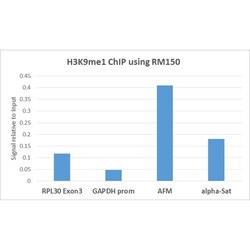
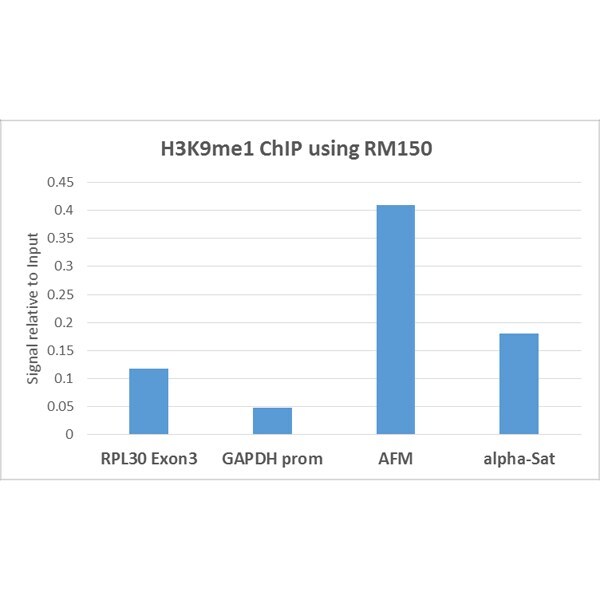
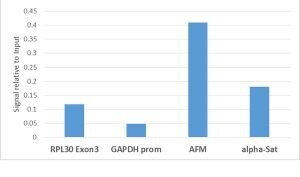
- ChIP performed on HeLa cells using a Monomethyl-Histone H3 (Lys9) Recombinant Rabbit Monoclonal Antibody (RM150) (Product # MA5-33385) at 5 µg. Real-time PCR was performed using primers specific to the gene indicated.
- Submitted by
- Invitrogen Antibodies (provider)
- Main image
- Experimental details
- K-MetStat Panel, SNAP-ChIP™ Spike-in (Product # A47356), a proprietary technology developed by EpiCypher™ was used to analyze the performance of H3K9me1 antibody (Product # MA5-33385) in ChIP. SNAP-ChIP panels consist of a pool of DNA-barcoded recombinant nucleosomes harboring histone PTMs that are spiked-in to a ChIP reaction to assess efficiency and specificity of the antibody. The K-MetStat panel includes an unmodified control plus nucleosomes containing histones with mono, di and tri-methyl forms of lysine residues on histone H3 and H4 as shown on the x-axis. Recovery of each unique DNA-barcoded nucleosome is quantified to determine how much of each PTM is immunoprecipitated in the ChIP reaction (for more information see reference). H3K9me1 was tested in native ChIP with 3 µg K-562 cell chromatin and 3 µg antibody. Specificity (left Y-axis) was determined by qPCR to each modified nucleosome in the panel (X-axis). Black bar represents antibody efficiency (right Y-axis; log scale) and indicates percentage of the barcoded nucleosome target immunoprecipitated relative to Input. All bars represent mean ± SEM.
- Submitted by
- Invitrogen Antibodies (provider)
- Main image
- Experimental details
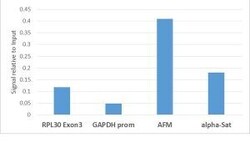
- ChIP performed on HeLa cells using H3K9me1 Recombinant Monoclonal antibody (Product # MA5-33385) with a dilution of 5 µg. Real-time PCR was performed using primers specific to the gene indicated.
Supportive validation
- Submitted by
- Invitrogen Antibodies (provider)
- Main image
- Experimental details
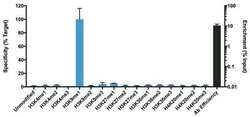
- Antibody specificity was demonstrated by detection of enrichment of the targeted histone modification using SNAP-ChIP™ Spike-in, a proprietary technology developed by EpiCypher™. SNAP-ChIP™ spike-in was performed using H3K9me1 Recombinant Rabbit Monoclonal antibody (Product # MA5-33385) and H3K9me1 was enriched compared to the other histone modifications in the SNAP-ChIP™ K-MetStat Panel (Product # A47356).
- Submitted by
- Invitrogen Antibodies (provider)
- Main image
- Experimental details
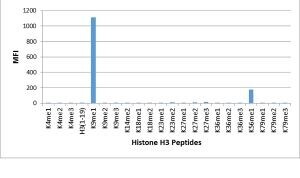
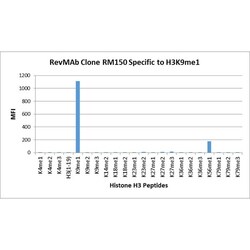
- Luminex assay using Monomethyl-Histone H3 (Lys9) Recombinant Rabbit Monoclonal Antibody (RM150) (Product # MA5-33385) showed that the antibody specifically reacts to Histone H3 monomethy- lated at Lysine 9 (K9me1). There was no cross reactivity with non-modified Lysine 9, dimethylated Lysine 9 (K9me2), trimethylated Lysine 4 (K9me3), or other methylations in histone H3.
- Submitted by
- Invitrogen Antibodies (provider)
- Main image
- Experimental details
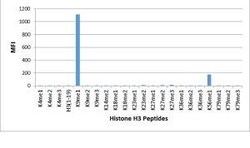
- Luminex analysis of H3K9me1 Recombinant Monoclonal antibody (Product # MA5-33385) specifically reacts Histone H3 monomethylated at Lysine 9 (K9me1). No cross reactivity with non-modified Lysine 9, dimethylated Lysine 9 (K9me2), trimethylated Lysine 4 (K9me3), or other methylations in histone H3..