Explore
 Validate
 Learn
Learn Western blot
 ELISA
ELISAAntibody data
- Antibody Data
- Antigen structure
- References [9]
- Comments [0]
- Validations
- Western blot [1]
- Immunohistochemistry [1]
Submit
Validation data
Reference
Comment
Report error
- Product number
- 12266-1-AP - Provider product page

- Provider
- Proteintech Group
- Proper citation
- Proteintech Cat#12266-1-AP, RRID:AB_10697683
- Product name
- SCAP antibody
- Antibody type
- Polyclonal
- Description
- SCAP antibody (Cat. #12266-1-AP) is a rabbit polyclonal antibody that shows reactivity with human, mouse and has been validated for the following applications: IF, IHC, WB,ELISA.
- Reactivity
- Human, Mouse
- Host
- Rabbit
- Conjugate
- Unconjugated
- Isotype
- IgG
- Vial size
- 20ul, 150ul
Submitted references Scap stabilizes PKM2 to promote glycolysis and enhance anti-fungal immunity in macrophages.
Hepatic HSD17B6 is dispensable for diet-induced fatty liver disease in mice.
A Super-Enhancer-Driven Transcriptional Regulatory Circuit Underlying Abiraterone Resistance in Castration-Resistant Prostate Cancer.
Identification of the novel role of sterol regulatory element binding proteins (SREBPs) in mechanotransduction and intraocular pressure regulation.
Identification of the novel role of sterol regulatory element binding proteins (SREBPs) in mechanotransduction and intraocular pressure regulation.
TDP-43 regulates cholesterol biosynthesis by inhibiting sterol regulatory element-binding protein 2.
Epstein-Barr virus subverts mevalonate and fatty acid pathways to promote infected B-cell proliferation and survival.
Lin28 enhances de novo fatty acid synthesis to promote cancer progression via SREBP-1.
Insulin regulates carboxypeptidase E by modulating translation initiation scaffolding protein eIF4G1 in pancreatic β cells.
Huang J, Wang Y, Li F, Zhang N, Tian G, Guo D, Guo Y, Liu Z, Wu Y, Li X, Xu F, Qin Z, Jia R, Dong L, Gao S, Yu J, Lou J, Ying S, Scharf DH, Li W, Chen Z
Cell reports 2026 Mar 24;45(3):117106
Cell reports 2026 Mar 24;45(3):117106
Hepatic HSD17B6 is dispensable for diet-induced fatty liver disease in mice.
Yuan D, Bai N, Zhu Q, Song S, He A, Wang J, Chen Y
Biochemistry and biophysics reports 2025 Mar;41:101924
Biochemistry and biophysics reports 2025 Mar;41:101924
A Super-Enhancer-Driven Transcriptional Regulatory Circuit Underlying Abiraterone Resistance in Castration-Resistant Prostate Cancer.
Jiang L, Wang J, Peng G, Zhang H, Fang J, Gao Y, Lou E, Liu Y, Ding W, Liu B, Mao Q, Jiang L, Liu A, Li X, Hu S, Ma Q, Zheng Y, Zhao Z, Shi X
Advanced science (Weinheim, Baden-Wurttemberg, Germany) 2025 Aug;12(31):e01284
Advanced science (Weinheim, Baden-Wurttemberg, Germany) 2025 Aug;12(31):e01284
Identification of the novel role of sterol regulatory element binding proteins (SREBPs) in mechanotransduction and intraocular pressure regulation.
Wang T, Soundararajan A, Rabinowitz J, Jaiswal A, Osborne T, Pattabiraman PP
FASEB journal : official publication of the Federation of American Societies for Experimental Biology 2023 Nov;37(11):e23248
FASEB journal : official publication of the Federation of American Societies for Experimental Biology 2023 Nov;37(11):e23248
Identification of the novel role of sterol regulatory element binding proteins (SREBPs) in mechanotransduction and intraocular pressure regulation.
Wang T, Soundararajan A, Rabinowitz J, Jaiswal A, Osborne T, Pattabiraman PP
bioRxiv : the preprint server for biology 2023 May 10;
bioRxiv : the preprint server for biology 2023 May 10;
TDP-43 regulates cholesterol biosynthesis by inhibiting sterol regulatory element-binding protein 2.
Egawa N, Izumi Y, Suzuki H, Tsuge I, Fujita K, Shimano H, Izumikawa K, Takahashi N, Tsukita K, Enami T, Nakamura M, Watanabe A, Naitoh M, Suzuki S, Seki T, Kobayashi K, Toda T, Kaji R, Takahashi R, Inoue H
Scientific reports 2022 May 14;12(1):7988
Scientific reports 2022 May 14;12(1):7988
Epstein-Barr virus subverts mevalonate and fatty acid pathways to promote infected B-cell proliferation and survival.
Wang LW, Wang Z, Ersing I, Nobre L, Guo R, Jiang S, Trudeau S, Zhao B, Weekes MP, Gewurz BE
PLoS pathogens 2019 Sep;15(9):e1008030
PLoS pathogens 2019 Sep;15(9):e1008030
Lin28 enhances de novo fatty acid synthesis to promote cancer progression via SREBP-1.
Zhang Y, Li C, Hu C, Wu Q, Cai Y, Xing S, Lu H, Wang L, Huang D, Sun L, Li T, He X, Zhong X, Wang J, Gao P, Smith ZJ, Jia W, Zhang H
EMBO reports 2019 Oct 4;20(10):e48115
EMBO reports 2019 Oct 4;20(10):e48115
Insulin regulates carboxypeptidase E by modulating translation initiation scaffolding protein eIF4G1 in pancreatic β cells.
Liew CW, Assmann A, Templin AT, Raum JC, Lipson KL, Rajan S, Qiang G, Hu J, Kawamori D, Lindberg I, Philipson LH, Sonenberg N, Goldfine AB, Stoffers DA, Mirmira RG, Urano F, Kulkarni RN
Proceedings of the National Academy of Sciences of the United States of America 2014 Jun 3;111(22):E2319-28
Proceedings of the National Academy of Sciences of the United States of America 2014 Jun 3;111(22):E2319-28
No comments: Submit comment
Supportive validation
- Submitted by
- Proteintech Group (provider)
- Main image
- Experimental details
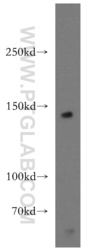
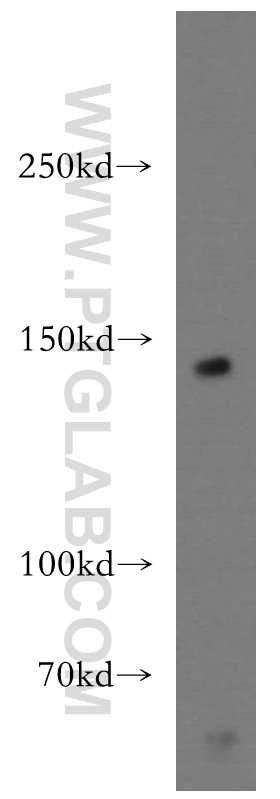
- HEK-293 cells were subjected to SDS PAGE followed by western blot with 12266-1-AP(SCAP antibody) at dilution of 1:300
- Sample type
- cell line
Supportive validation
- Submitted by
- Proteintech Group (provider)
- Main image
- Experimental details
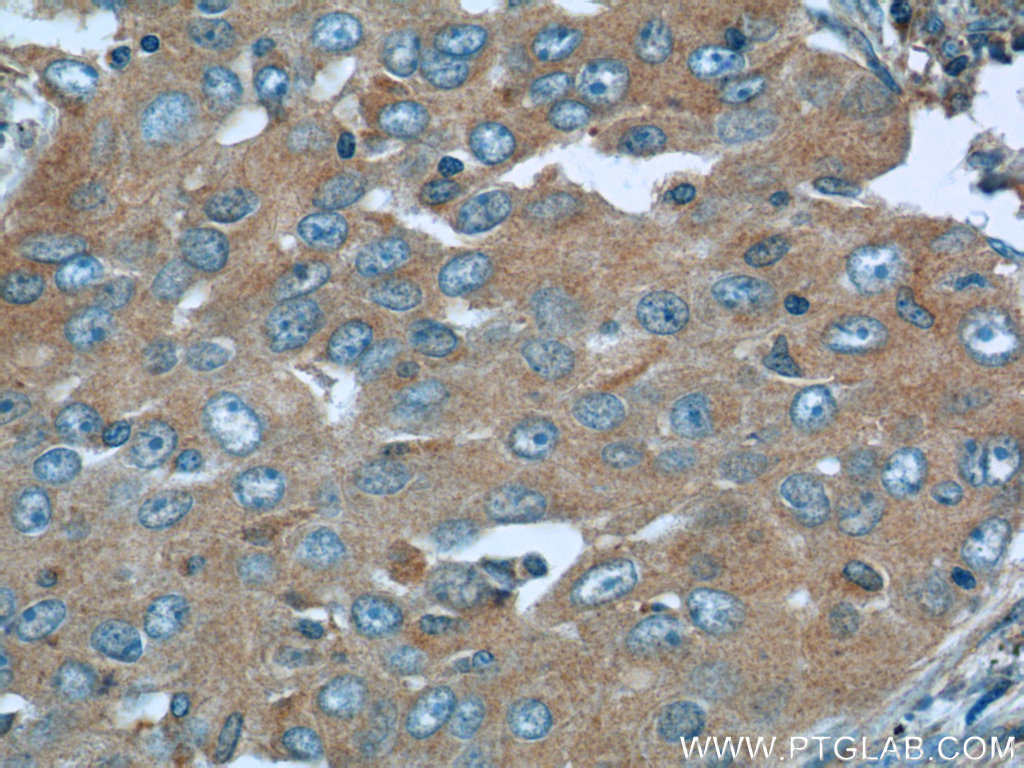
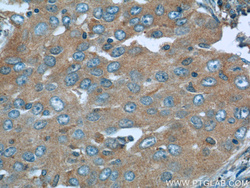
- The SCAP antibody from Proteintech is a rabbit polyclonal antibody to a recombinant protein of human SCAP. This antibody recognizes human,mouse,rat antigen. The SCAP antibody has been validated for the following applications: ELISA, WB, IHC analysis.